Every elopement is different. But here is one way your day in the desert could unfold.
Namibia Elopement Photographer
Eloping in Sossusvlei, Namibia
Exchange your vows among the oldest dunes on earth. Just the two of you, the red sand, and the silence of the Namib.
Start Planning your sossusvlei elopement
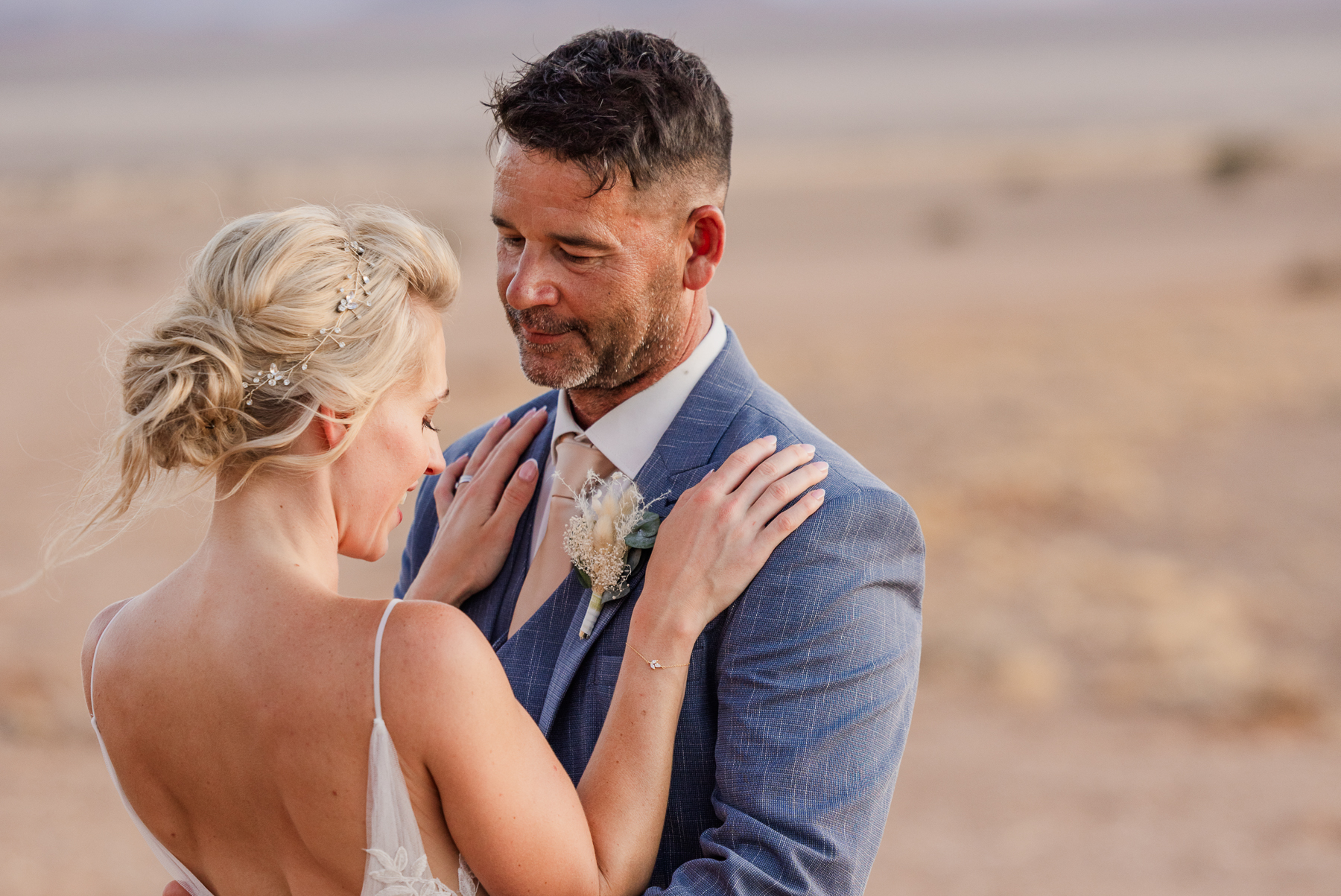
THE Desert Awaits
Why Elope in Sossusvlei
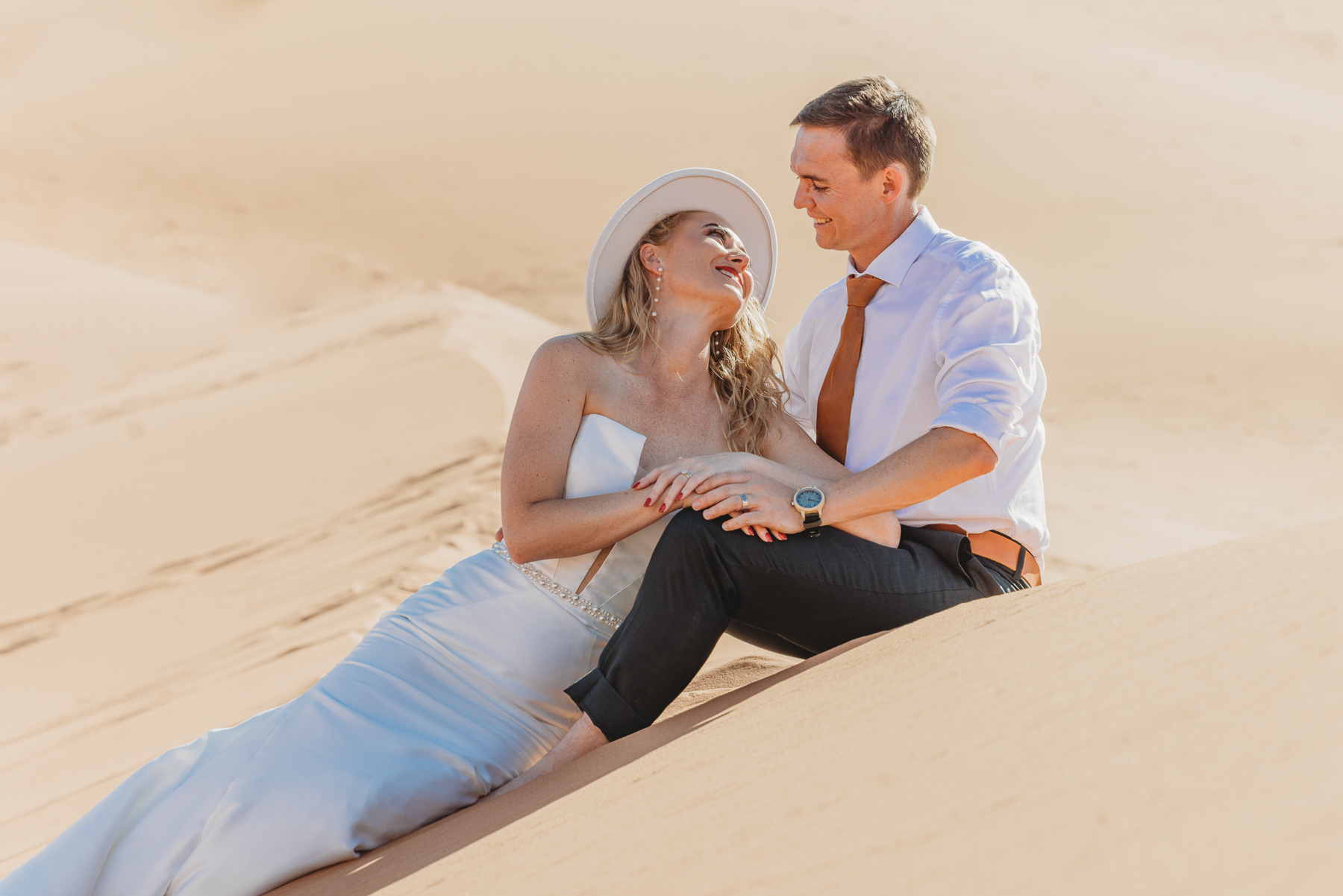
Sossusvlei is not just a location. It is a feeling. The towering red dunes of the Namib Desert — some over 300 metres high and thousands of years old — create a landscape so surreal it feels like stepping into another world entirely.
Then there is Deadvlei. A white clay pan scattered with ancient camelthorn trees, surrounded by some of the tallest dunes on the planet. At sunrise, the light shifts from violet to copper, and the silence is so complete you can hear the sand move.
For couples who want their wedding day to be about connection — not a guest list, not a schedule, not someone else’s expectations — this is the place. An elopement here is not just a ceremony. It is an experience that stays with you long after the sand has been shaken from your boots.
Your Adventure
What a Sossusvlei Elopement Day Could Look Like
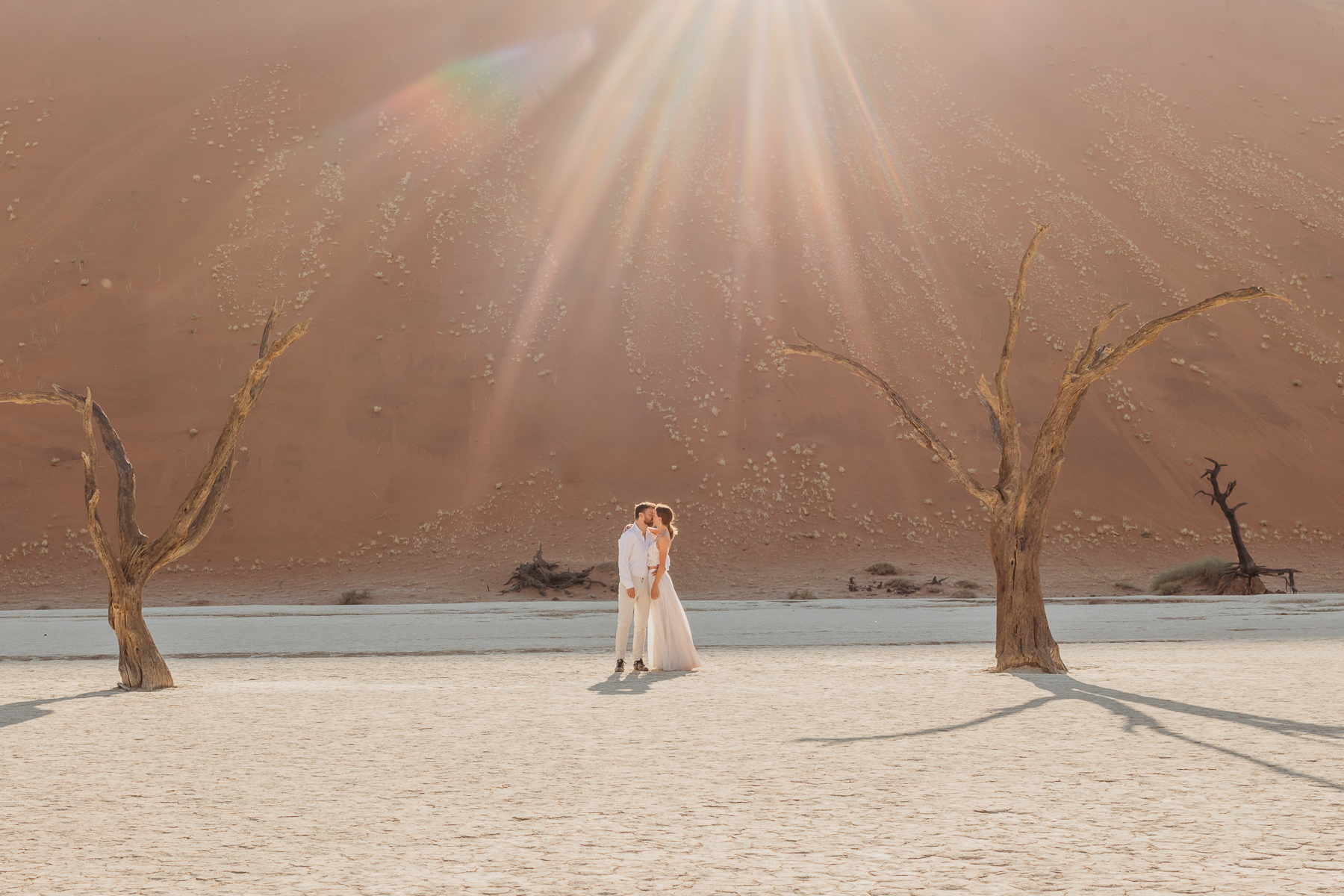
Sunrise in Deadvlei
We arrive before dawn, walking across the white clay pan as the first light touches Big Daddy dune. The ancient trees cast long shadows. The air is cool and still. This is where you say your vows.
Exploring Deadvlei
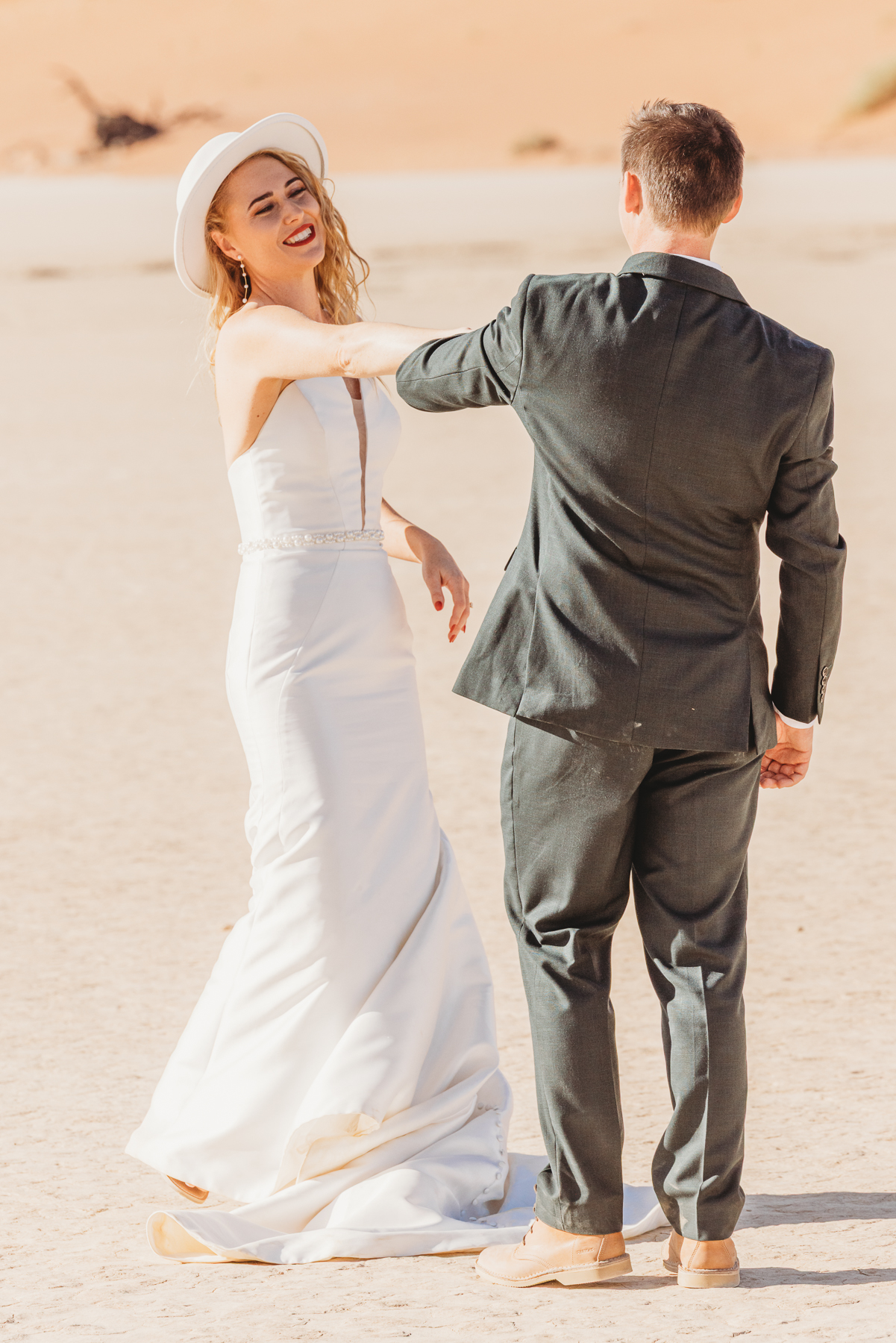
After you have said your vows, we explore. The dry pan crunches beneath your feet as we stroll from tree to tree, taking in the wonder of Deavlei. The light is warm and directional — creating images that feel cinematic and vast..
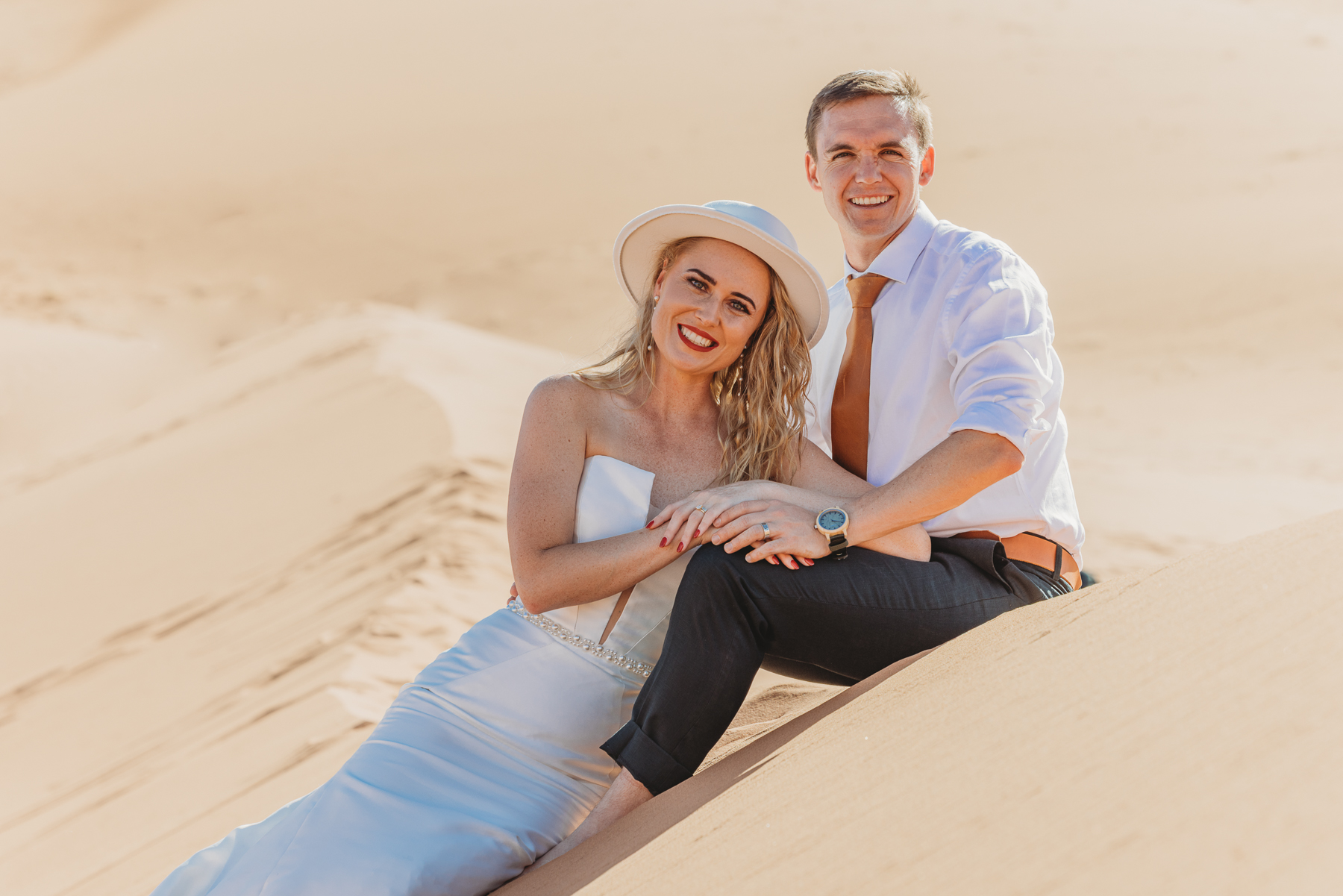
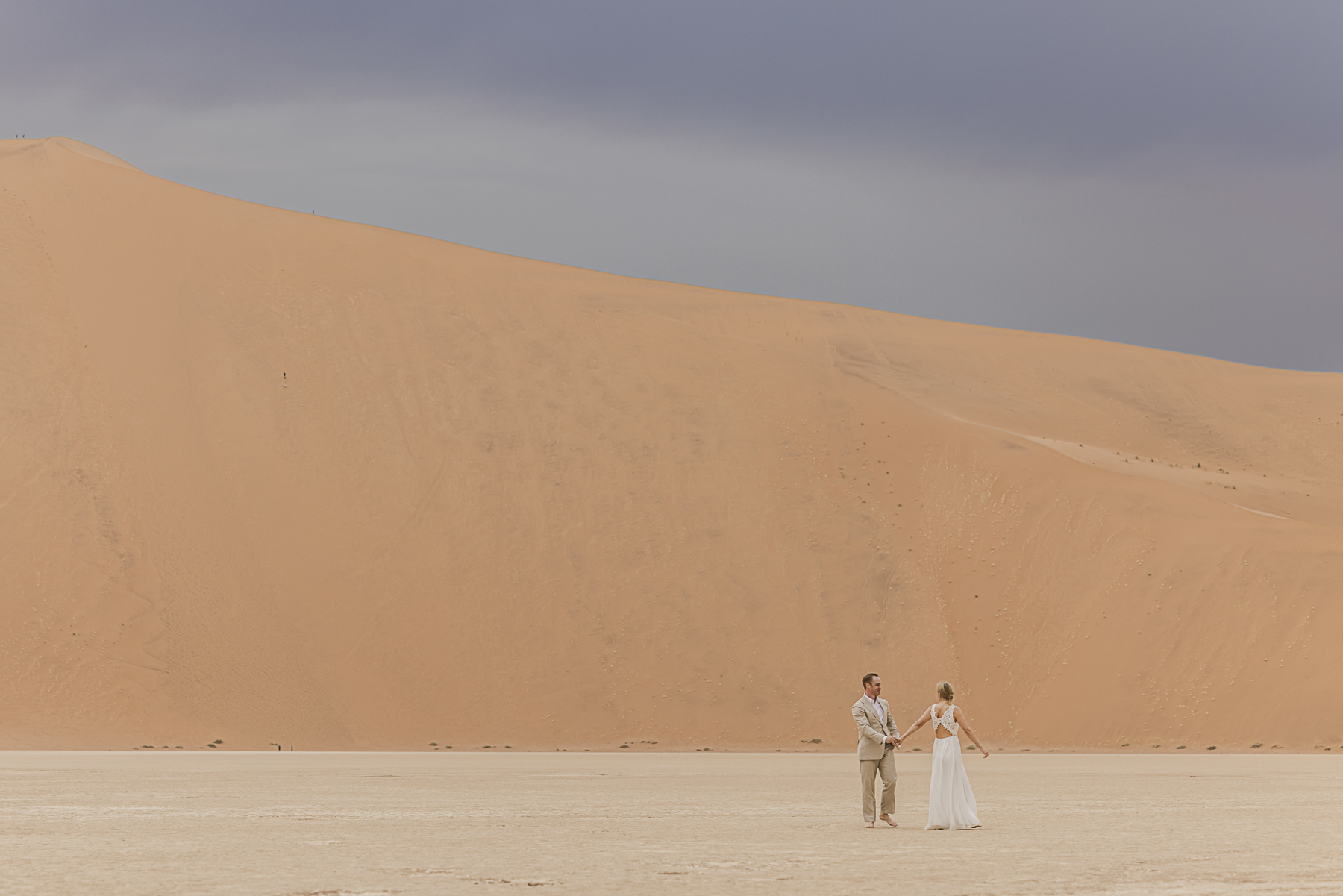
Private Desert Moments
We pause. A quiet picnic in the shade. Time to breathe, to be together, to let the weight of the day settle. Some of the most beautiful photographs happen in these unscripted moments.
Sunset in the Namib
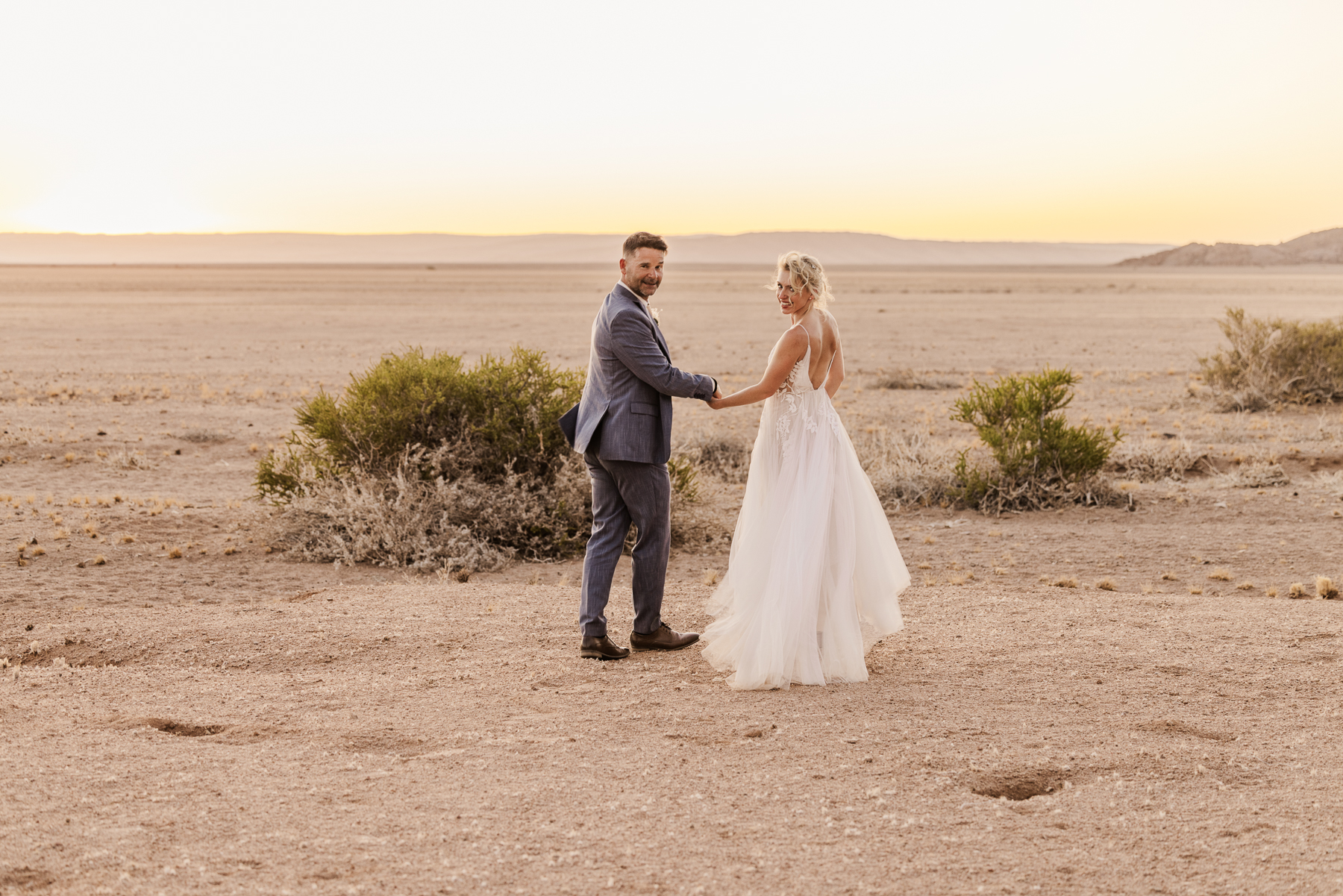
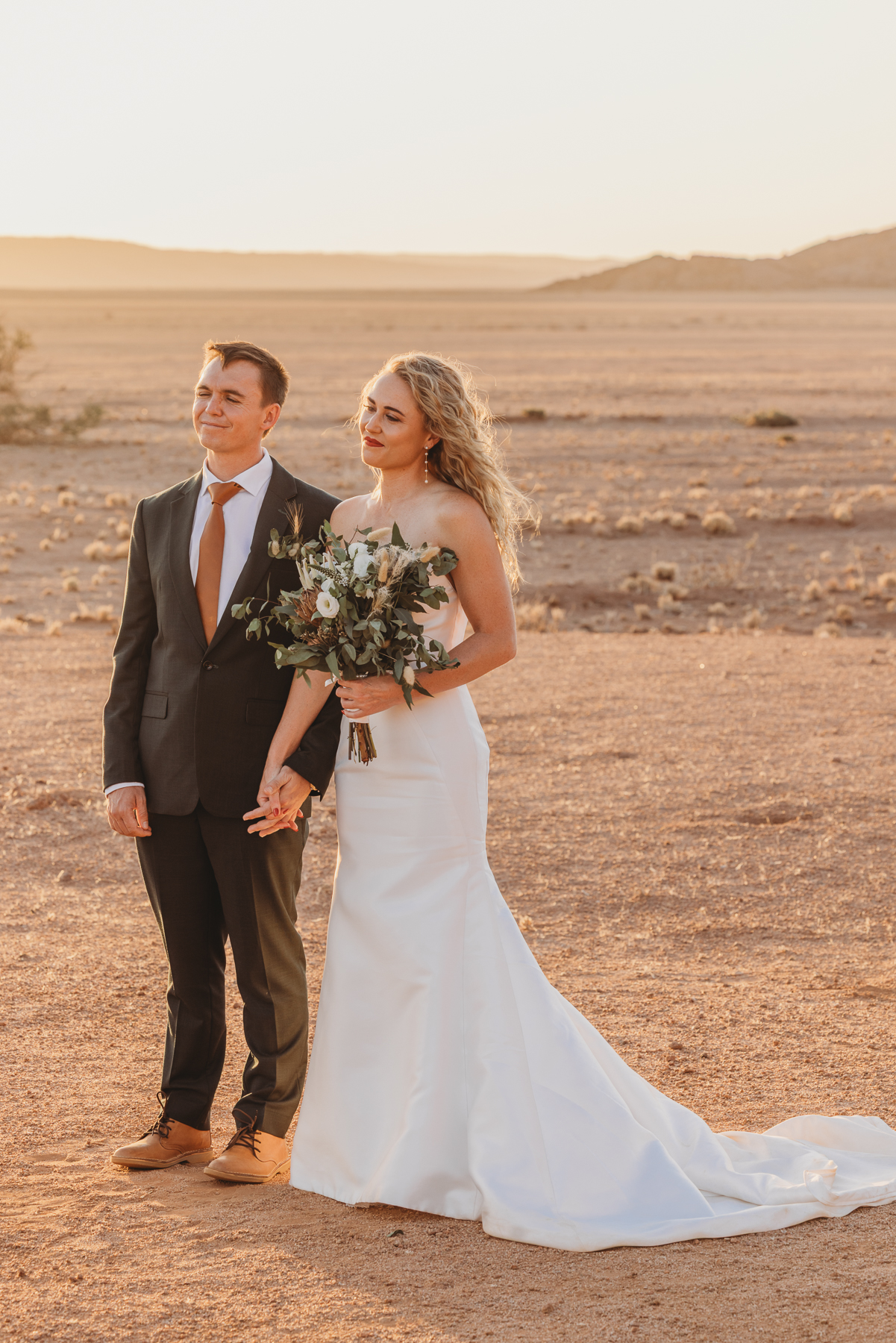
As the day fades, the dunes glow amber and violet. We return to the sand for the final chapter — golden hour portraits as the desert sky puts on a show that no venue could ever match.
Timing is Everythings
Best Time of Day for Deadvlei Photos
Arrive as early as possible.
When the sun clears Big Daddy and drops straight into Deadvlei, it doesn’t ease in gently—it hits. Hard.
Within minutes, the sweat starts pouring, your skin dries out, and before you know it, you’ve gone from glowing to something resembling a well-seasoned tomato.
The earlier you arrive, the better everything is.
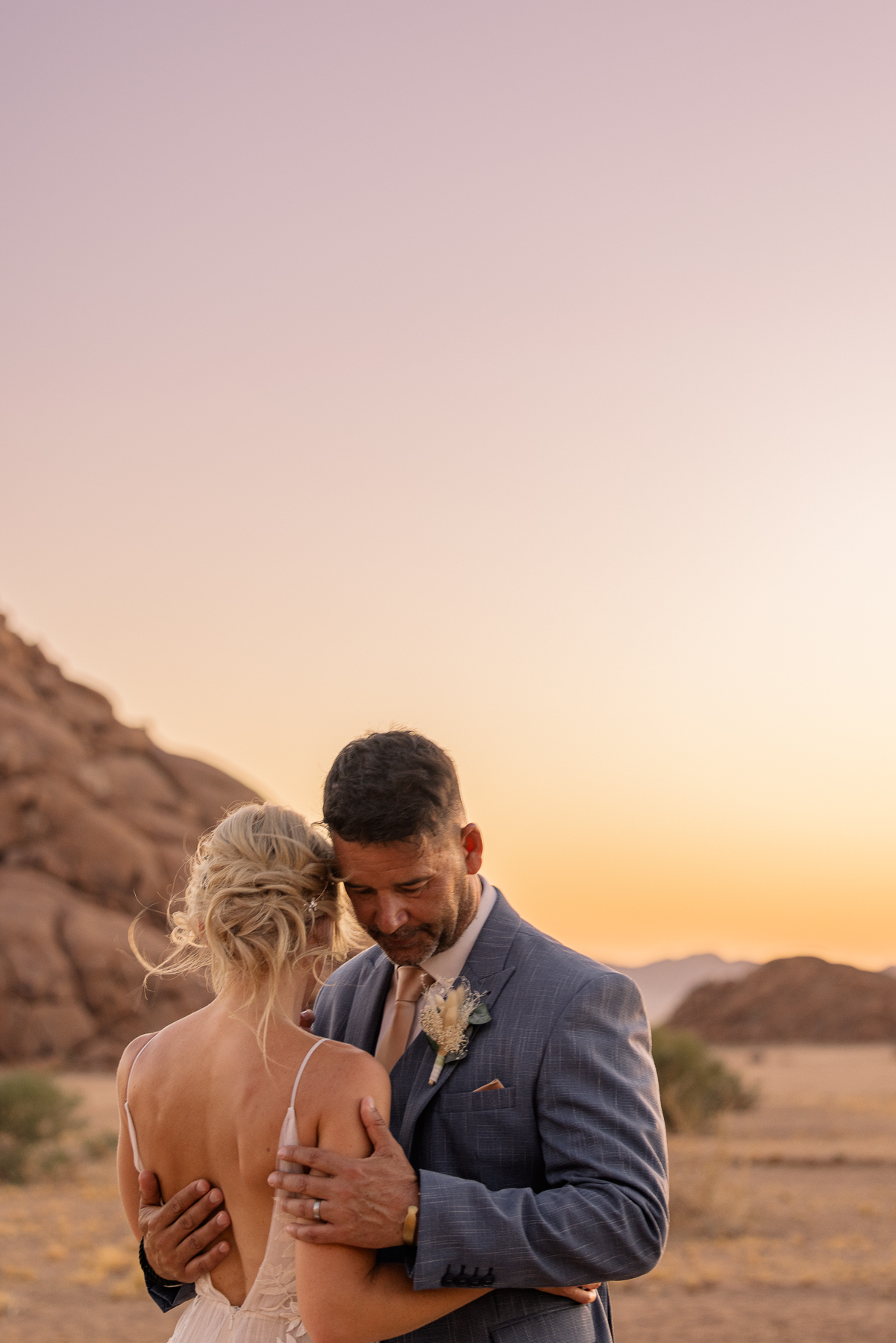
The air is crisp. The shadows are long. The contrast between the white clay, dark trees, and orange dunes is at its strongest. And importantly, you still look like yourself.
What people don’t always tell you is just how quickly the heat changes things out there.
From around 11 AM, especially in the warmer months, heat waves begin to rise off the pan. You can actually see them—like a shimmer in the air. Beautiful to the eye, but not to the camera.
They soften everything.
Images lose their sharpness, details start to blur, and no amount of expensive gear or clever editing can fully fix it.
It’s one of those things that can undo a photo faster than a frown.
My vote will always be with that crisp, blue morning light.
It’s quieter. Cleaner. More forgiving.
And practically speaking—it’s also the difference between enjoying the experience and feeling like you’re slowly being roasted alongside your camera.
During winter (May to August), the gates to Namib-Naukluft National Park open at around 6:30 AM.
In summer, you’re looking at closer to 5:00 AM—and yes, it’s worth every bit of the early start.
There’s also the walk to consider.
From the 4×4 drop-off point, it’s a short but sandy trek into Deadvlei itself. Nothing extreme—but in rising heat, it feels longer than it is.
Good footwear, water, and a steady pace go a long way.
I’ve photographed at Deadvlei more times than I can count, and I know exactly how quickly the light moves across the pan.
There’s a relatively small window where everything aligns—the light, the shadows, the space—and knowing where to position you in that window makes all the difference.
The iconic compositions are there, yes.
But so are the quieter ones—the ones that feel a little less seen, a little more like your own.
And that’s usually where the magic sits.
BEYOND THE ORDINARY
Why Elope in Namibia
Couples choose Namibia because it strips everything back to what matters. No guest list politics. No catering decisions. No performance. Just the two of you in one of the most visually extraordinary countries on Earth.
It is a place for people who value travel, adventure, and genuine connection. Who would rather feel the wind on a dune ridge than walk down an aisle. Who want their wedding day to feel like them — grounded, adventurous, and deeply intentional.
A REAL LOVE STORY
Hans & Ranelda - An Intimate Sossusvlei Wedding
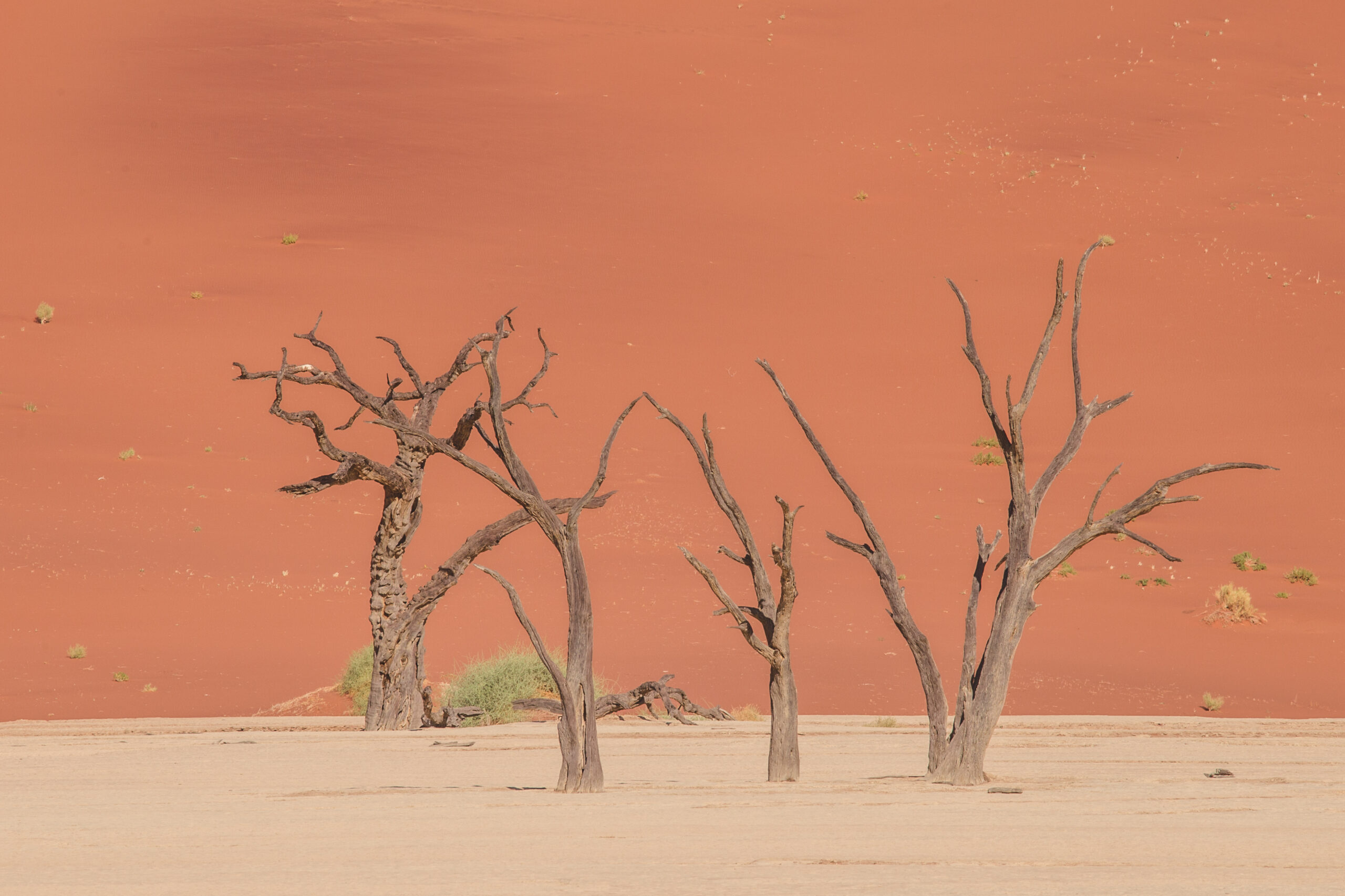
Two families travelled from across the border, to the middle of nowhere, to celebrate love on the vast desert plains. It was not a performance. It was a gathering — grounded, real, and deeply moving.
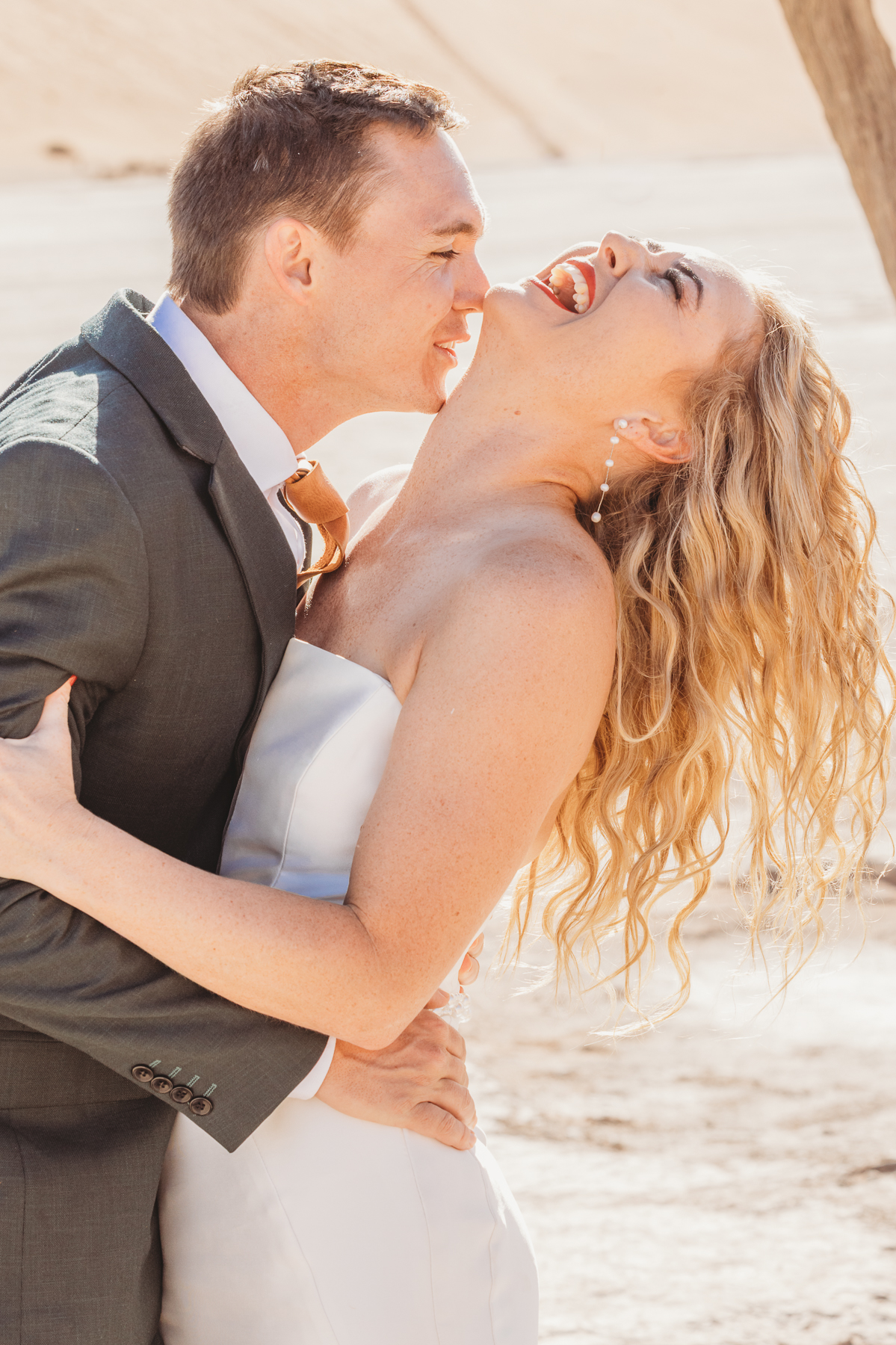
The ceremony happened as the sun turned the dunes to gold. There were tears. There was laughter that echoed across open plains. And the next day, they climbed the burning hot dunes to Deadvlei — because some places demand to be experienced, heat and all.
Your Guide in the Desert
Working With a Namibia-Based Photographer
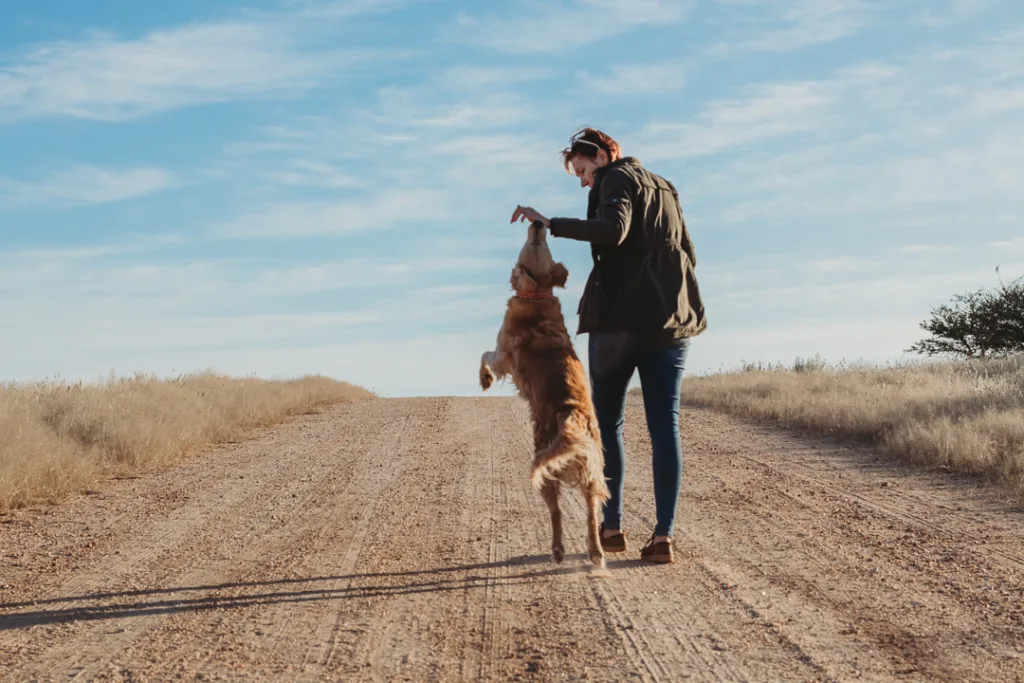
I'm Mariëtte du Toit — a documentary photographer based in Namibia, telling love stories in untamed places. I have lived and worked in this landscape for over a decade. I know the light. I know the logistics. I know where to take you so that the experience feels as extraordinary as the photographs.
Remote weddings require flexibility and trust. I bring a calm, unobtrusive presence so you can relax into the moment. When you feel at ease, everything unfolds naturally — and that is when the most honest images happen.
My background in tourism and lodge management means I understand park access, sunrise gate times, desert heat, and the kind of planning that international couples need. I do not just photograph your day — I help you shape it.
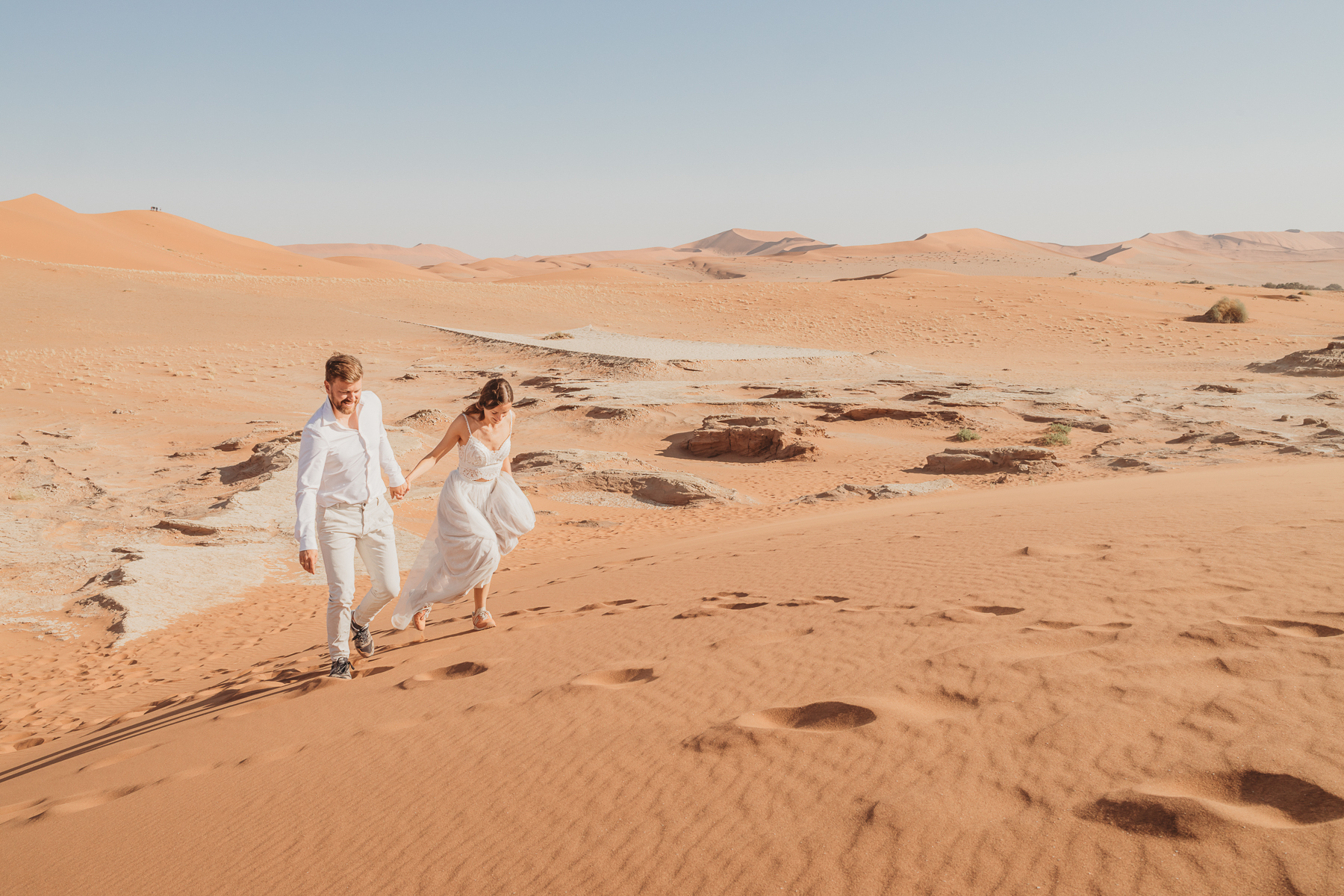
Let's Make It Happen
Planning Your Sossusvlei Elopement
Planning a destination elopement in Namibia can feel overwhelming — especially from abroad. That is exactly why I offer full planning support alongside my photography. This is more than a photoshoot. It is an experience, and I help you design every part of it.
- Location guidance — the best dunes, the quietest spots, the most dramatic light
- Timeline planning — from gate times to golden hour
- Accommodation and officiant recommendations
- Creating a day that feels intentional, connected, and deeply personal
Coverage Options
Elopement Packages
Starting from N$22,000. Every elopement is unique — I will tailor the experience to fit your vision and your travel plans.
CONTENT
SOCIAL
INFLUENCER
AFFILIATE
CONTENT
SOCIAL
INFLUENCER
AFFILIATE
CONTENT
SOCIAL
INFLUENCER
AFFILIATE
CONTENT
SOCIAL
INFLUENCER
AFFILIATE
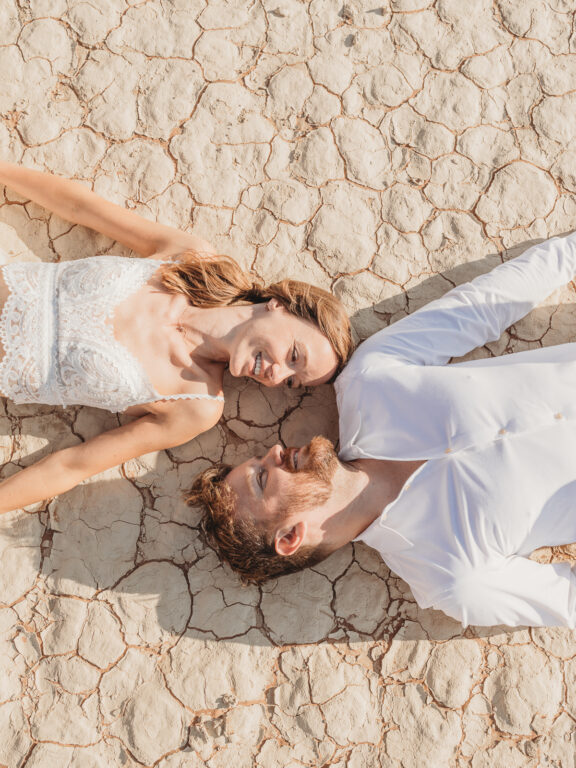
01
The Elopement Experience
For intimate weddings & adventures
Starting from
N$22,000
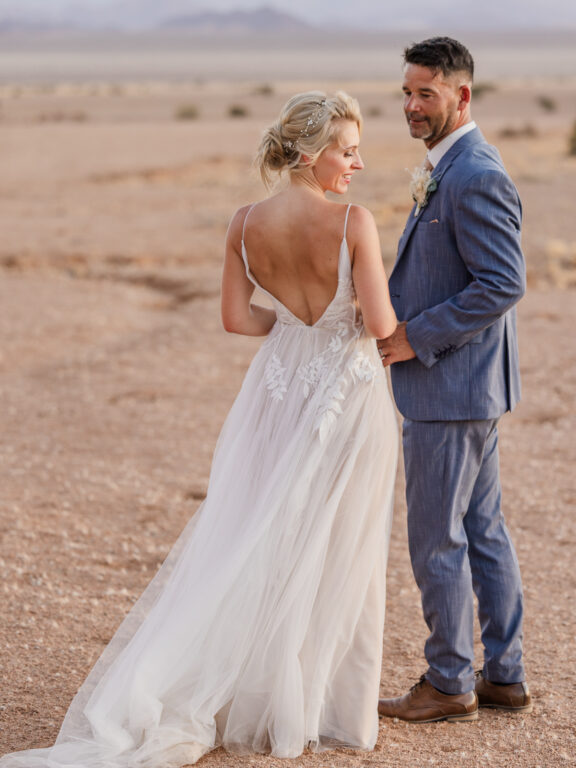
02
The Wedding Experience
For full-day weddings
Starting from
N$30,000
Happy clients
1+
Years of Experience
1
Photos Edited
1+
Projects Completed
1+
Your questions answered
Frequently Asked Questions
What is the best time of year to elope in Sossusvlei?
The ideal months for a Sossusvlei elopement are April to September — Namibia’s dry season. Temperatures are comfortable (20–28°C during the day), skies are reliably clear, and the light is at its most beautiful. May and June offer the softest golden tones. August and September bring warmer days with occasional dramatic cloud formations. The summer months (November–February) are significantly hotter (35–42°C) and can bring brief rain, but the landscapes take on a vivid green-gold contrast that is highly photogenic. I have photographed elopements in every season and can help you choose the best window for your vision.
What time do we need to enter the park for Deadvlei sunrise photos
You need to arrive at the Sesriem gate right when it opens. Gate times vary by season — around 5:00–5:30 AM in summer and 6:15–6:45 AM in winter. From the gate, it is a 65 km drive plus a short 4×4 section and a 1.2 km walk to reach Deadvlei. I recommend being there at least 15 minutes before sunrise. I know the exact routes and timing to get us positioned efficiently so we do not waste a single minute of that crisp morning light.
How hot does the desert get during the day?
Sossusvlei is one of the hottest places in Namibia. In summer (November–February), midday temperatures regularly hit 38–42°C, with sand surface temperatures exceeding 60°C. Winter days (May–August) are much more comfortable, averaging 22–28°C, though mornings can be chilly at around 5–10°C. I always plan the shooting schedule around the heat — we photograph in early morning and late afternoon, resting during the hottest hours. I will also advise you on what to wear so you look incredible without overheating. Hydration, sunscreen, and comfortable shoes for the sand are essential.
Where should couples stay for a Sossusvlei elopement?
Several excellent lodges are within reach of Sossusvlei. Dead Valley Lodge is inside the park, giving you early access before other visitors. &Beyond Sossusvlei Desert Lodge offers luxury tents with stunning dune views. Wilderness Kulala Desert Lodge & Little Kulala offers luxury accommodation and a private entrance into the park. Sossuslvei Lodge right outside the park gate, offers phenomenal private dinners and arrangements with a wide variety of accomations withion 10minutes from the gate. Le Mirage Resort & Spa provides a dramatic desert castle experience. I recommend staying at least two nights, so that we have flexibility with weather and light conditions. I am happy to provide personalised accommodation recommendations based on your budget and style.
How many hours of photography do we need for a desert elopement?
For a Sossusvlei elopement, I recommend a minimum of three to four hours to capture the experience — from early morning Deadvlei through to dune portraits. A full-day package is ideal because it allows us to shoot the sunrise ceremony, take a midday break during the heat, and return for golden hour and sunset on the dunes. This gives you the widest variety of locations, lighting conditions, and moods. I will work with you to create a timeline that fits your energy and vision.
Can you help us plan our Namibian elopement?
Absolutely. Planning a destination elopement in Namibia can feel daunting, but that is exactly why I offer full planning support alongside my photography. I will help you choose the best season and locations, recommend trusted service providers and accommodation, coordinate logistics like 4×4 transfers and permits, and create a detailed timeline for your day. I have lived in Namibia for years and know this landscape intimately. Get in touch through my contact page and let us start designing your desert elopement together.
Let's tell your story in the desert
I would love to hear about your plans. Whether you are just beginning to dream about a Namibia elopement or you have dates and locations in mind — reach out and let's start designing your experience together.