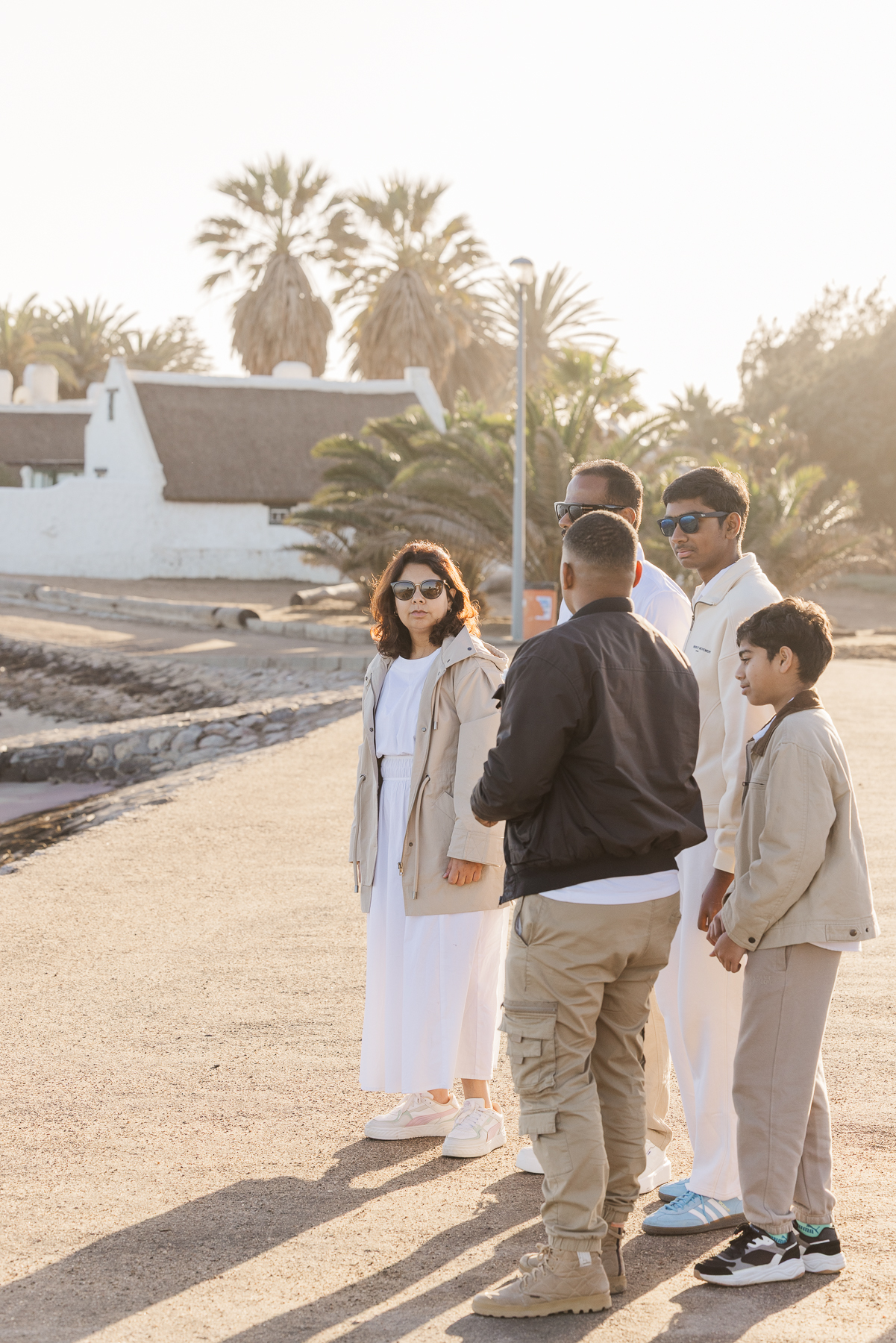
On the Namibian coast, weather forecasts are more like hopeful suggestions.
Monday had been cold. Grey. Wet. The sort of Walvis Bay day where the Atlantic disappears into a blanket of mist, and sunshine feels like something that happened to somebody else.
If you have a family photoshoot planned in Sandwich Harbour the following morning, you quietly spend the evening hoping. Hoping the fog lifts. Hoping the wind settles. Hoping the desert decides to show its face.
Tuesday arrived with blue skies stretching from horizon to horizon.
Not a cloud.
Not a bank of mist.
Just sunshine.
I don't think I've ever packed my camera bag quite so happily.
Before we'd even left the Waterfront, Nikita had already won me over.
A self-confessed coffee enthusiast, she'd stopped at Godenfang Restaurant on the way and, without knowing it, arrived carrying an extra cup for me. Sometimes kindness is wonderfully uncomplicated.
Their youngest son was almost the same age as my eldest, but he had the same outgoing, fearless personality as my youngest. The family lived and breathed cricket. Had we driven past an empty oval instead of the lagoon, I suspect we'd have been late to Sandwich Harbour.
It was going to be a good day.
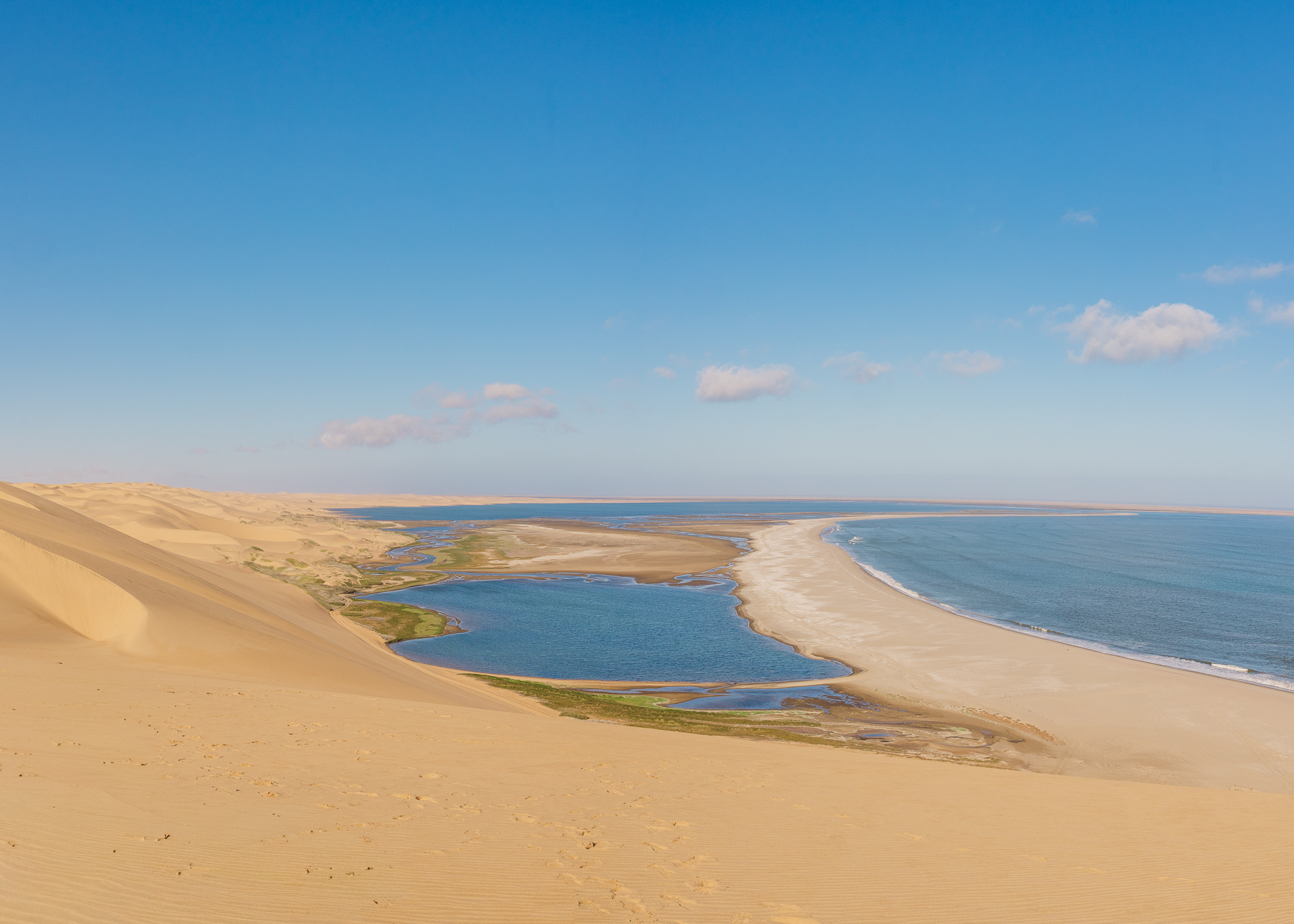
Our journey started where so many Namibian coastal adventures begin, alongside the Walvis Bay Lagoon.
Recognised internationally as one of southern Africa's most important coastal wetlands, the lagoon provides a sanctuary for thousands of migratory birds throughout the year. Greater and Lesser Flamingos feed in the shallow waters, transforming the coastline into shades of pink that somehow never become ordinary, no matter how many times you see them.
Watching the boys listen while brilliant pink birds wandered only metres away was the gentlest possible beginning to an adventure that would soon become considerably faster.
As we drove along the lagoon, past the salt pans and towards the Dorob National Park, we talked about life in Johannesburg and their journey through Namibia with Gondwana Travel. One of my favourite things about photographing travelling families is that you become part of their story for a few hours. Somewhere between conversations about Namibia and South Africa, school holidays and cricket, strangers quietly become familiar.
Perhaps that's one of the reasons I love photographing families so much.
The photographs are never really about the photographs.
They're about remembering.
As we entered the beach section of our journey, our guide asked the family whether they enjoyed roller coasters or if they had ever experienced dune driving before.
The answer was a firm no.
I had to smile.
Dune driving was going to be exciting.
Their youngest immediately loved the idea. Typical youngest child.
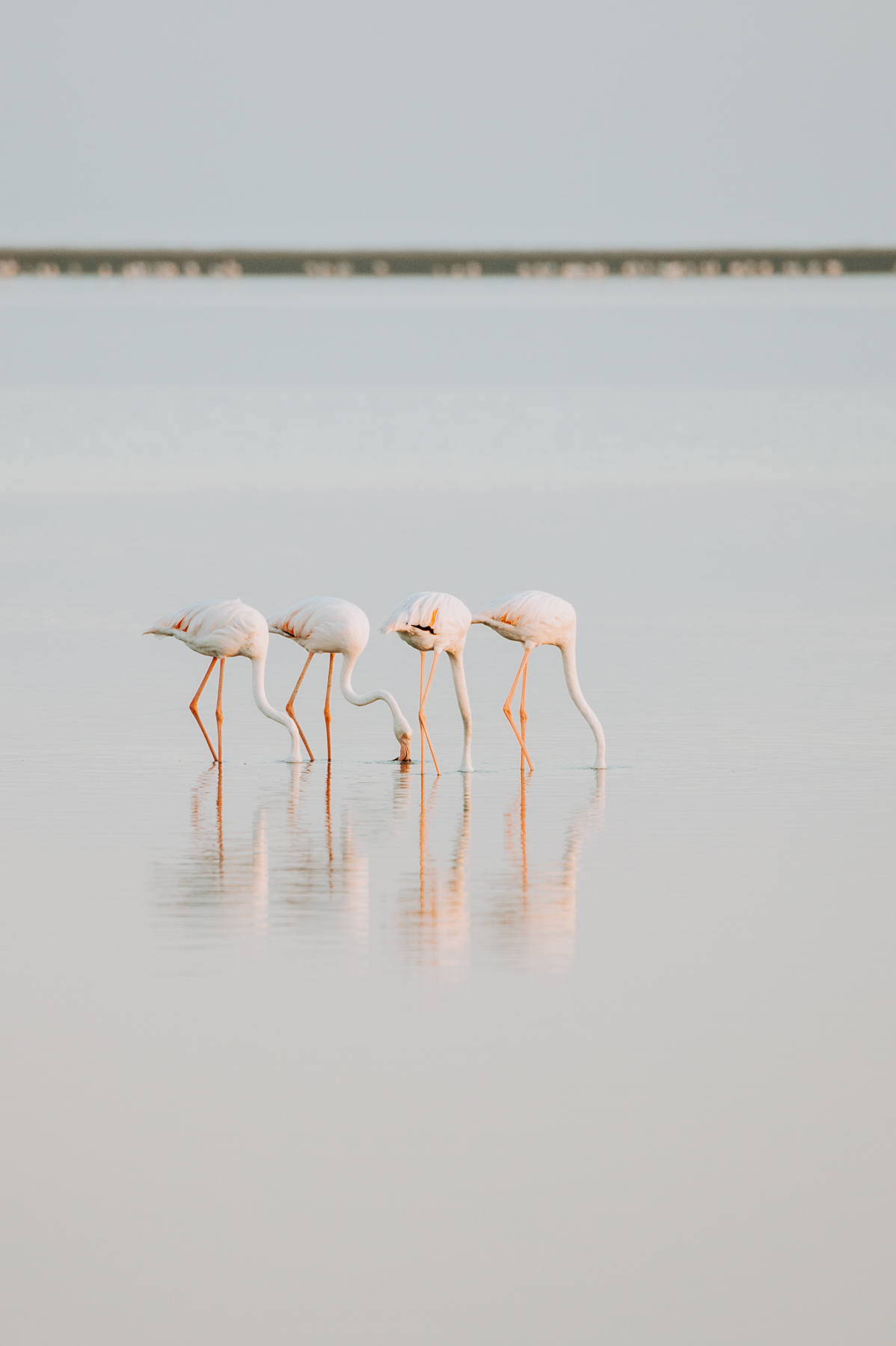
We drove along the beach until the dunes began rising beside us, slowly hemming us in until there was nowhere to go but forward. The Atlantic stretched endlessly to our right while towering walls of sand began to appear on our left.
I had to stop.
I had to take photographs.
Untouched and endless dunes tumbling into the ocean. It was time for our first photographs of the day.
Then the dunes opened, almost inviting us in.
And suddenly the rollercoaster had begun.
It was fast. It was good. And it was a whole lot of fun.
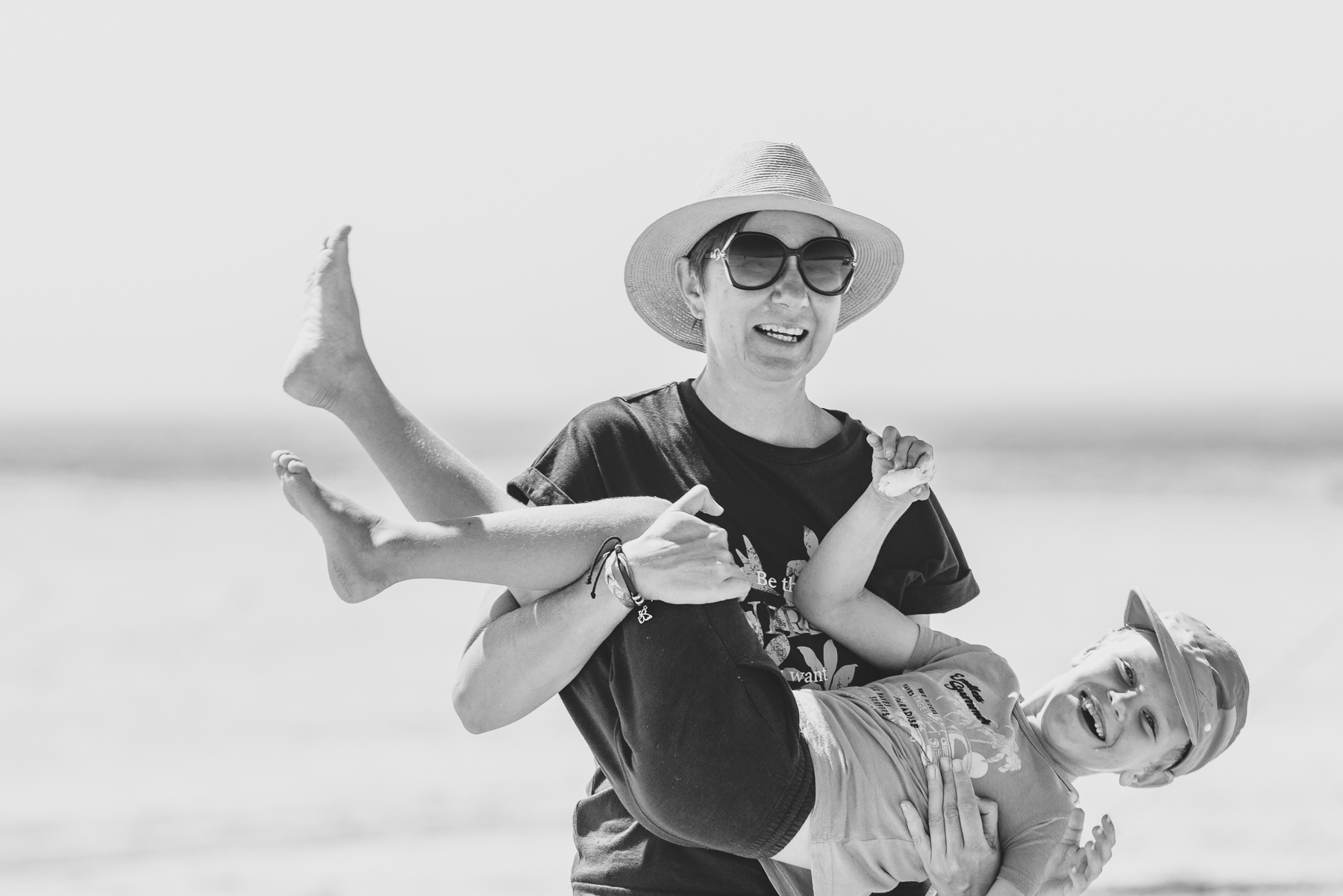
There is something wonderfully childlike about Sandwich Harbour. It doesn't seem to matter whether you're eight or eighty. The moment the vehicle tips over the crest of its first dune, everyone laughs the same way.
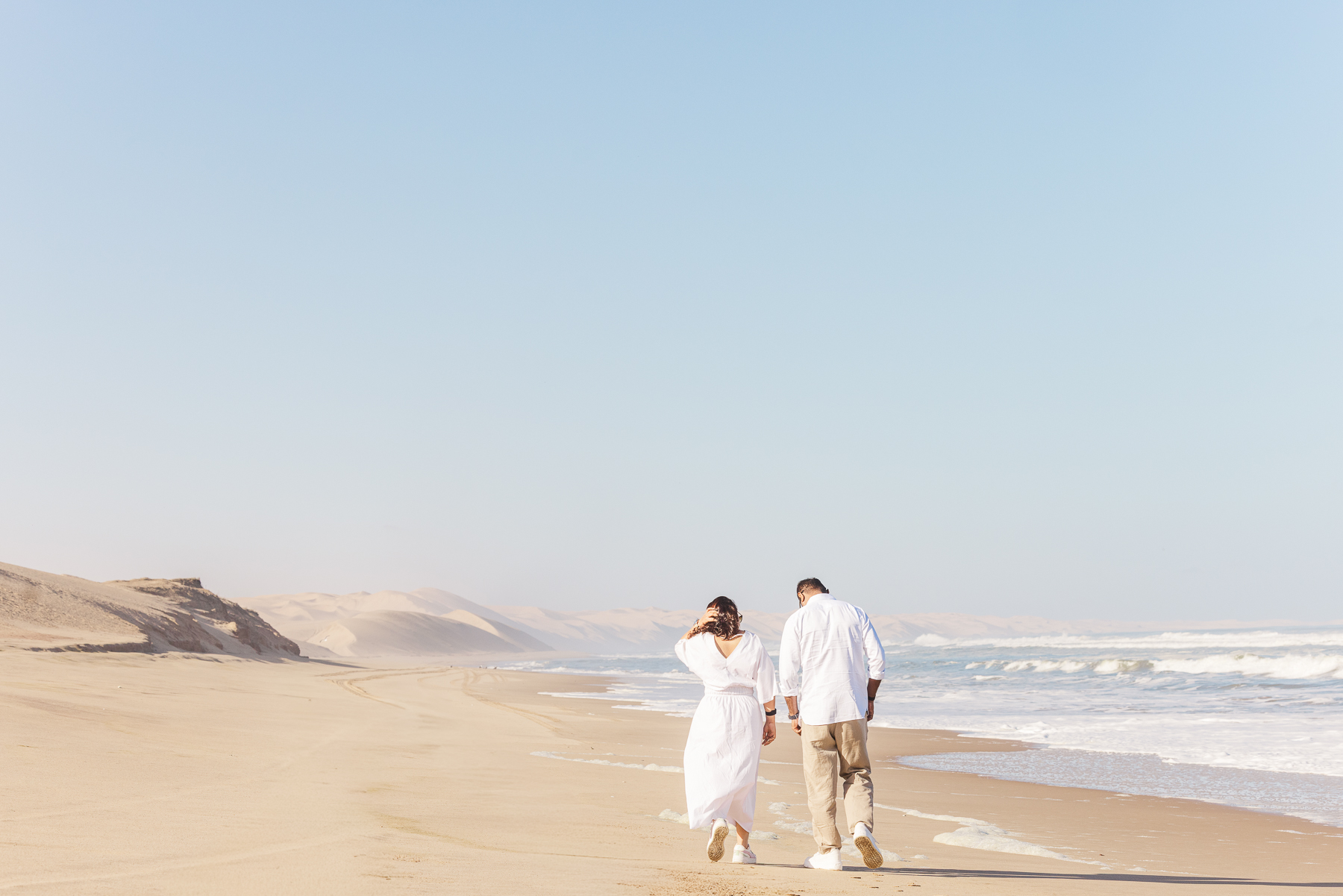
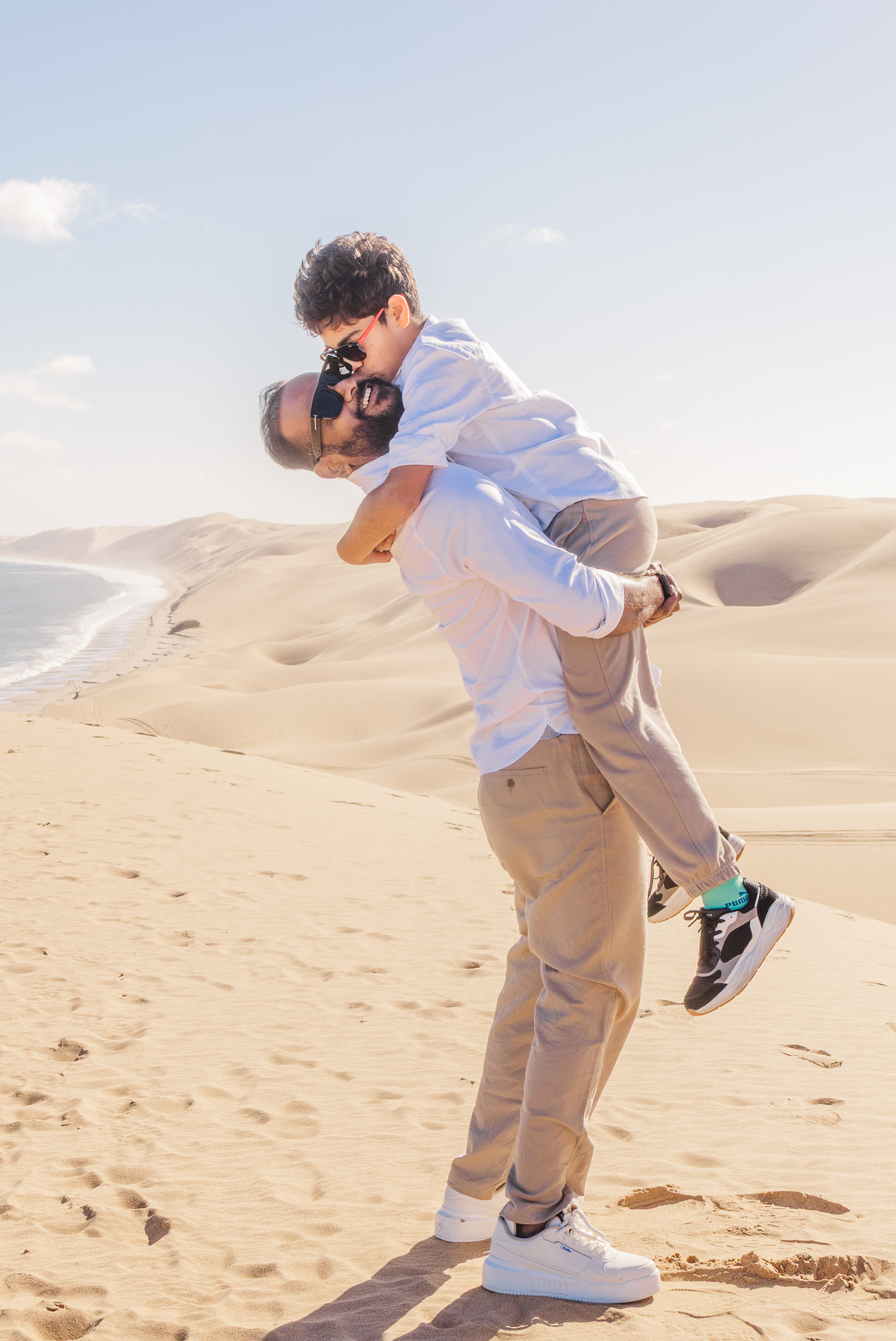
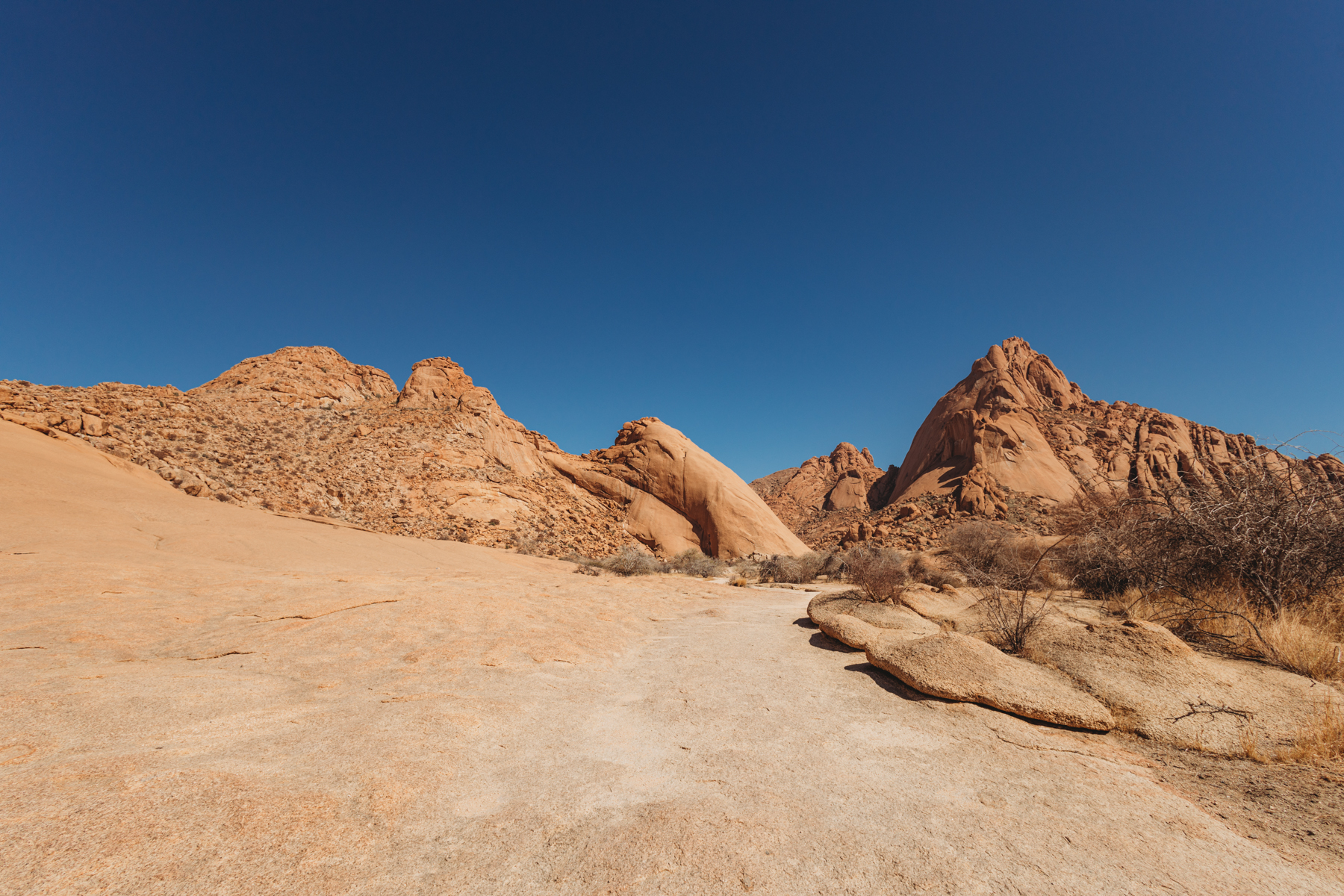
Few places in the world are as visually extraordinary as Sandwich Harbour. Situated within the Namib Sand Sea, Namibia's UNESCO World Heritage Site, it is one of the only places on Earth where towering dunes plunge dramatically into the Atlantic Ocean.
Access is entirely dependent on the tides, which means every excursion feels a little like being granted temporary access to somewhere impossible.
It is wild.
It is fragile.
And somehow, despite the thousands of photographs you've probably seen before visiting Namibia, nothing quite prepares you for seeing it with your own eyes.
When we stopped at our first viewpoint, my heart raced.
How did I get to do this for a living?
How could I ever be grateful enough?
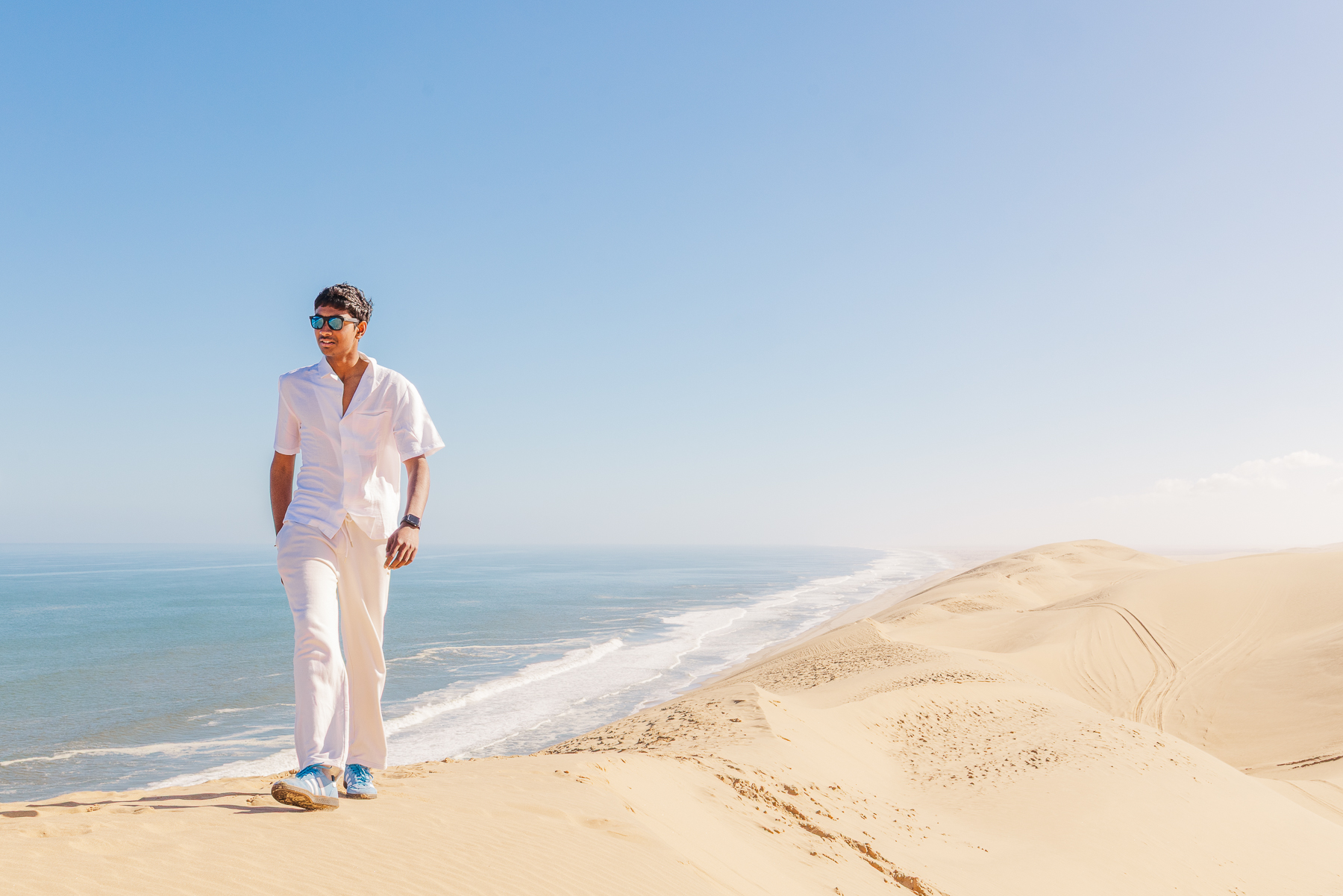
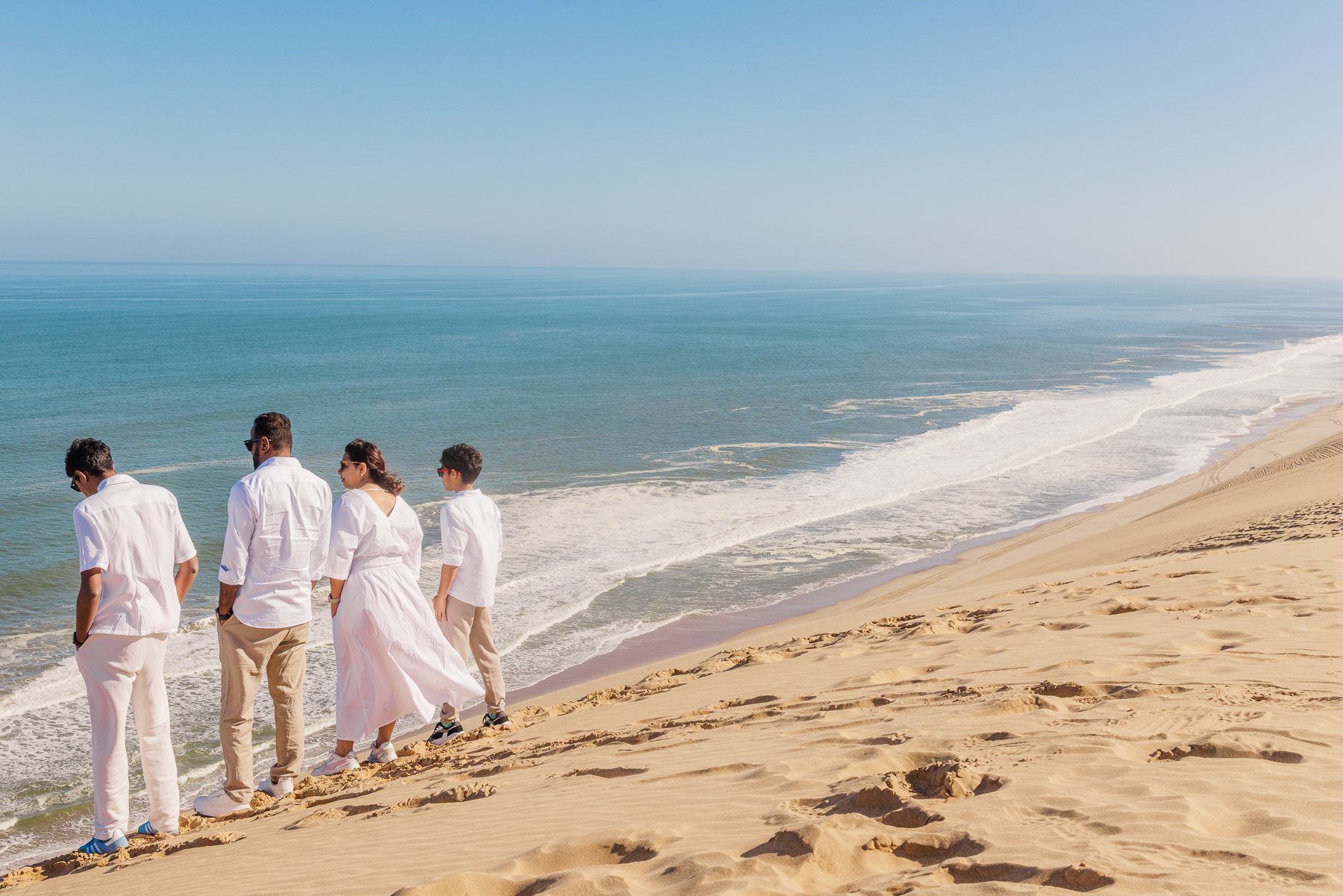
People often ask me what my favourite photographs are from a session.
They're rarely the photographs people expect.
It's seldom the perfectly posed family portrait or the image everyone immediately shares online.
My favourite photographs are usually the quiet victories.
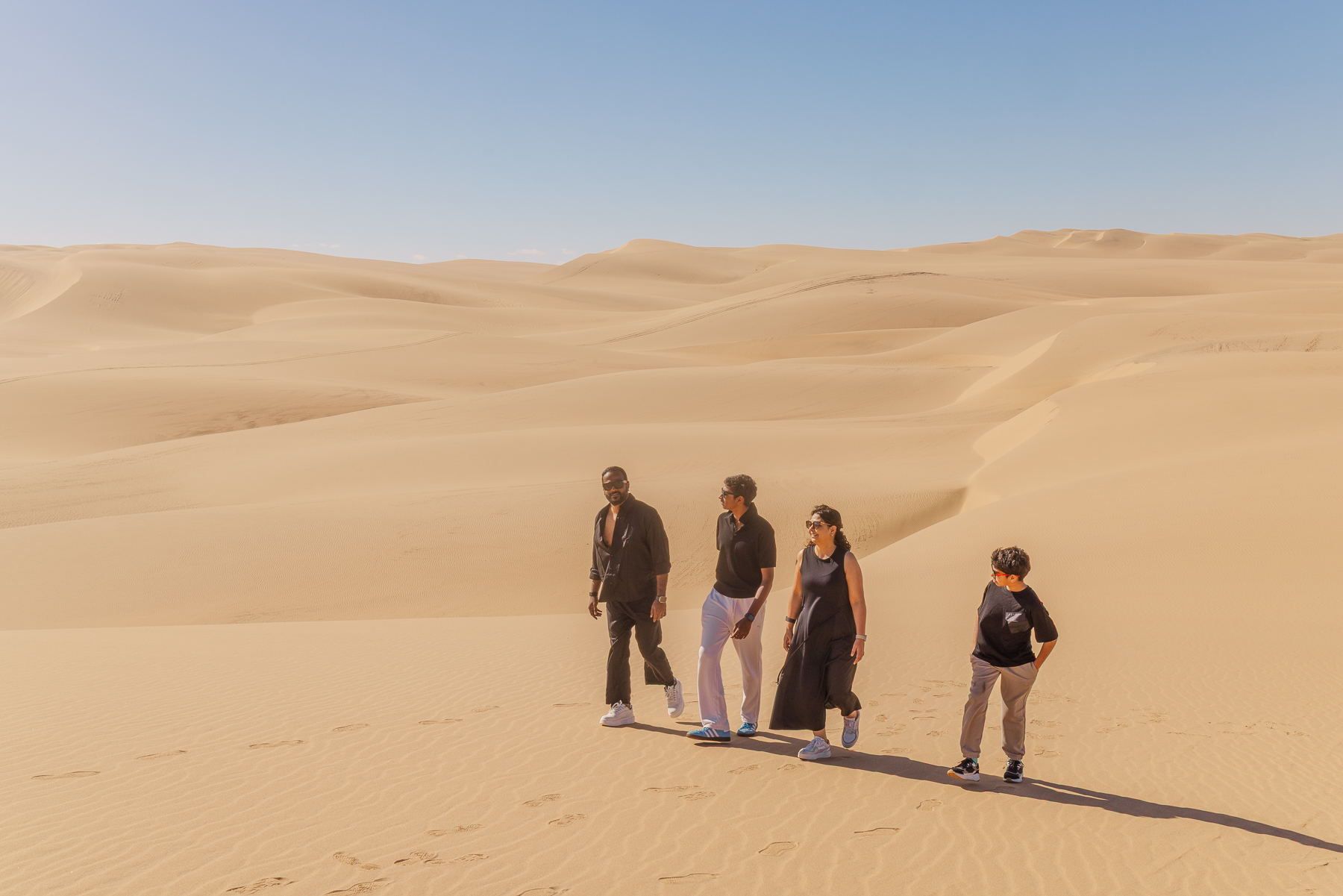
This time, it was watching their eldest son slowly forget about my camera.
Teenagers are wonderfully honest subjects. If they don't want to do something, you'll know almost immediately. But somewhere between walking through the dunes, climbing viewpoints, and simply enjoying the adventure, he stopped thinking about being photographed.
He was simply being himself.
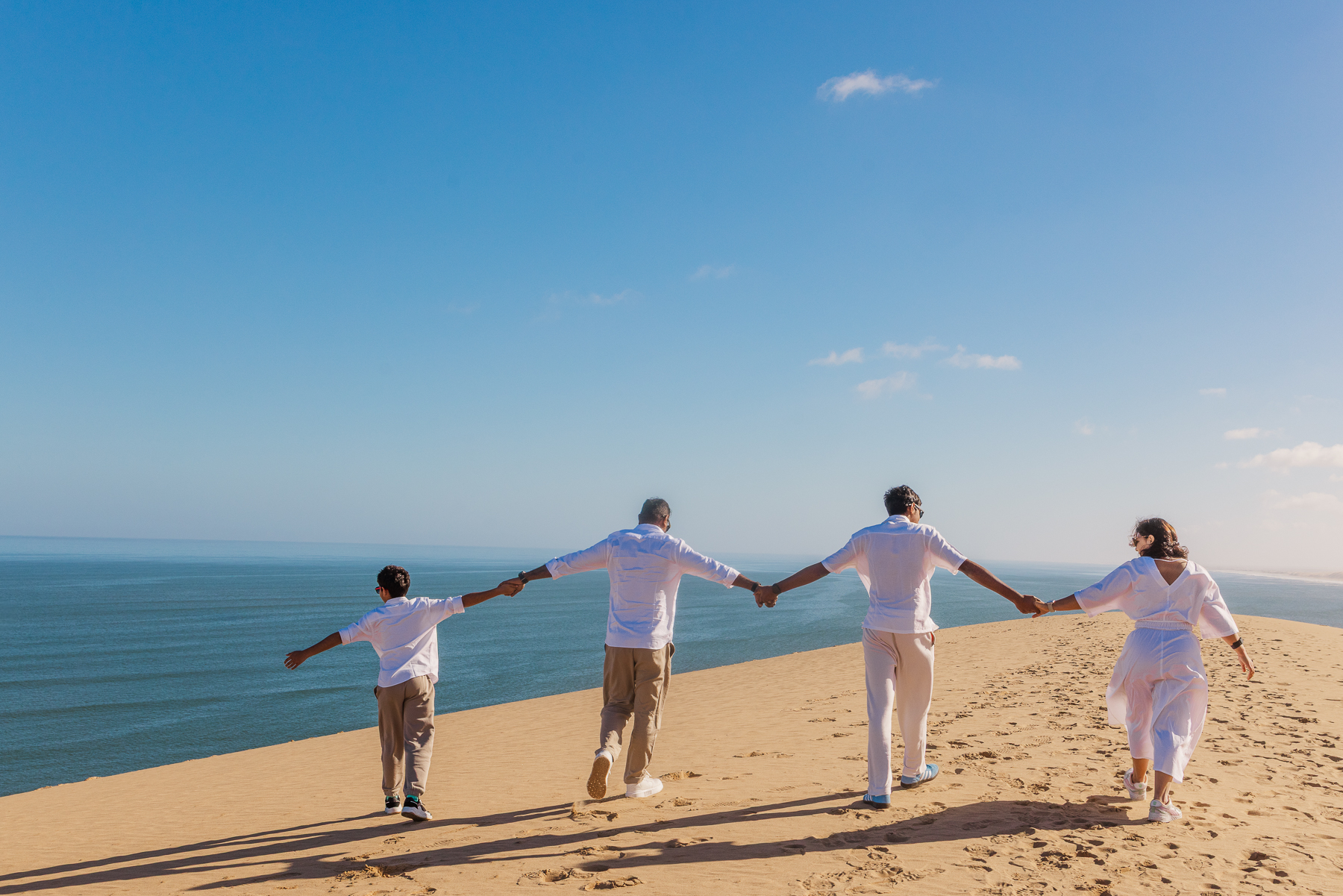
Watching the ocean from the edge of a dune.
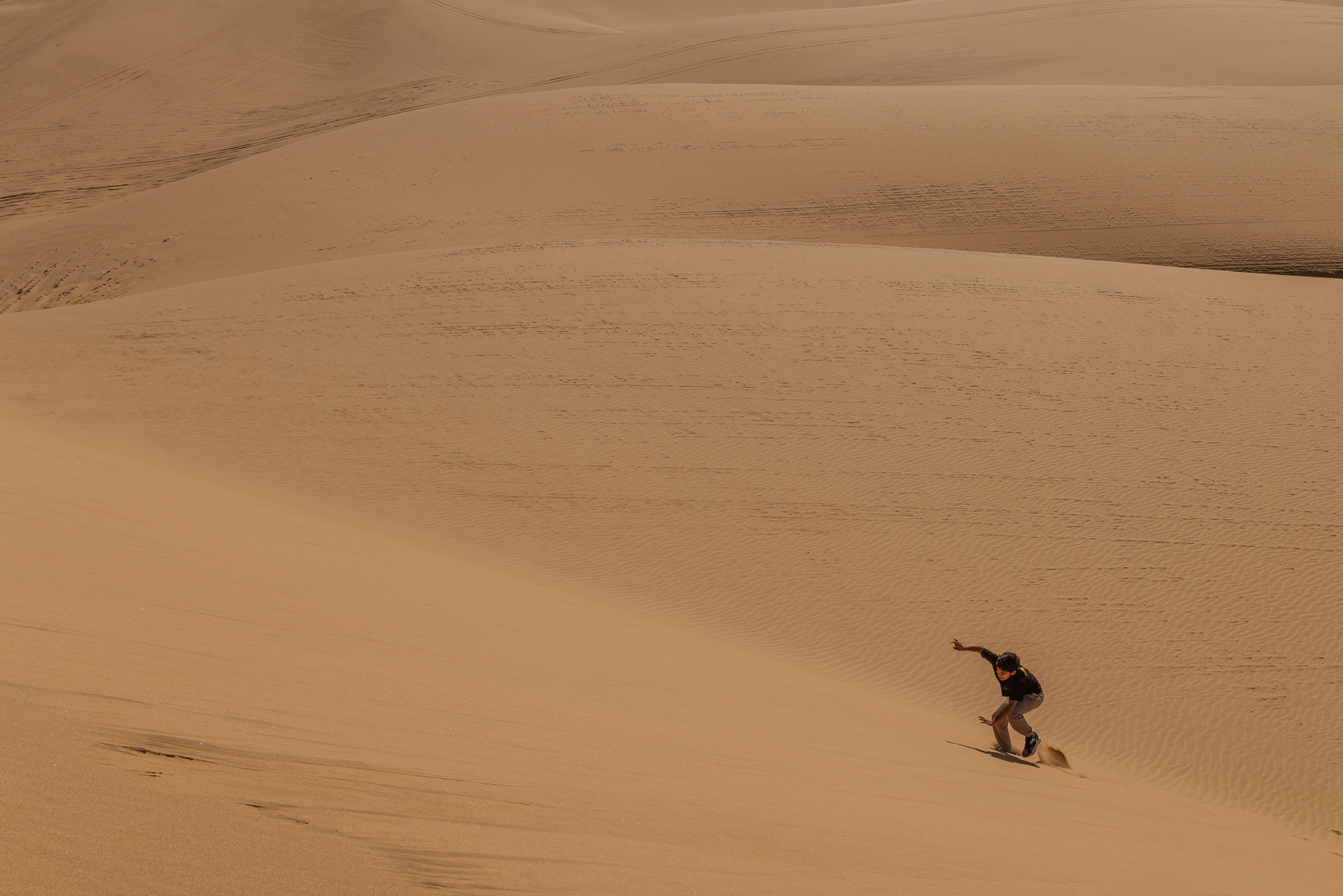
Running down a mountainside of sand.
Laughing with his family.
There was no posing required.
Only a little bit of time and the freedom to simply be fourteen.
I loved that.
The drive back to Walvis Bay always feels shorter.
Perhaps because everyone is quietly replaying the morning.
Before long, the dunes were behind us, the lagoon came back into view, and the adventure that had felt so enormous only hours earlier was suddenly over.
Sandwich Harbour has a habit of doing that.
It leaves sand in your shoes, hundreds of photographs on your memory cards, and a quiet certainty that you'll spend a very long time trying to find another place quite like it.
Photographs have become strangely disposable these days. Thousands live quietly on our phones, waiting to be rediscovered years later. Yet I don't think that's what I'm really photographing when families invite me along on their Namibian adventures.
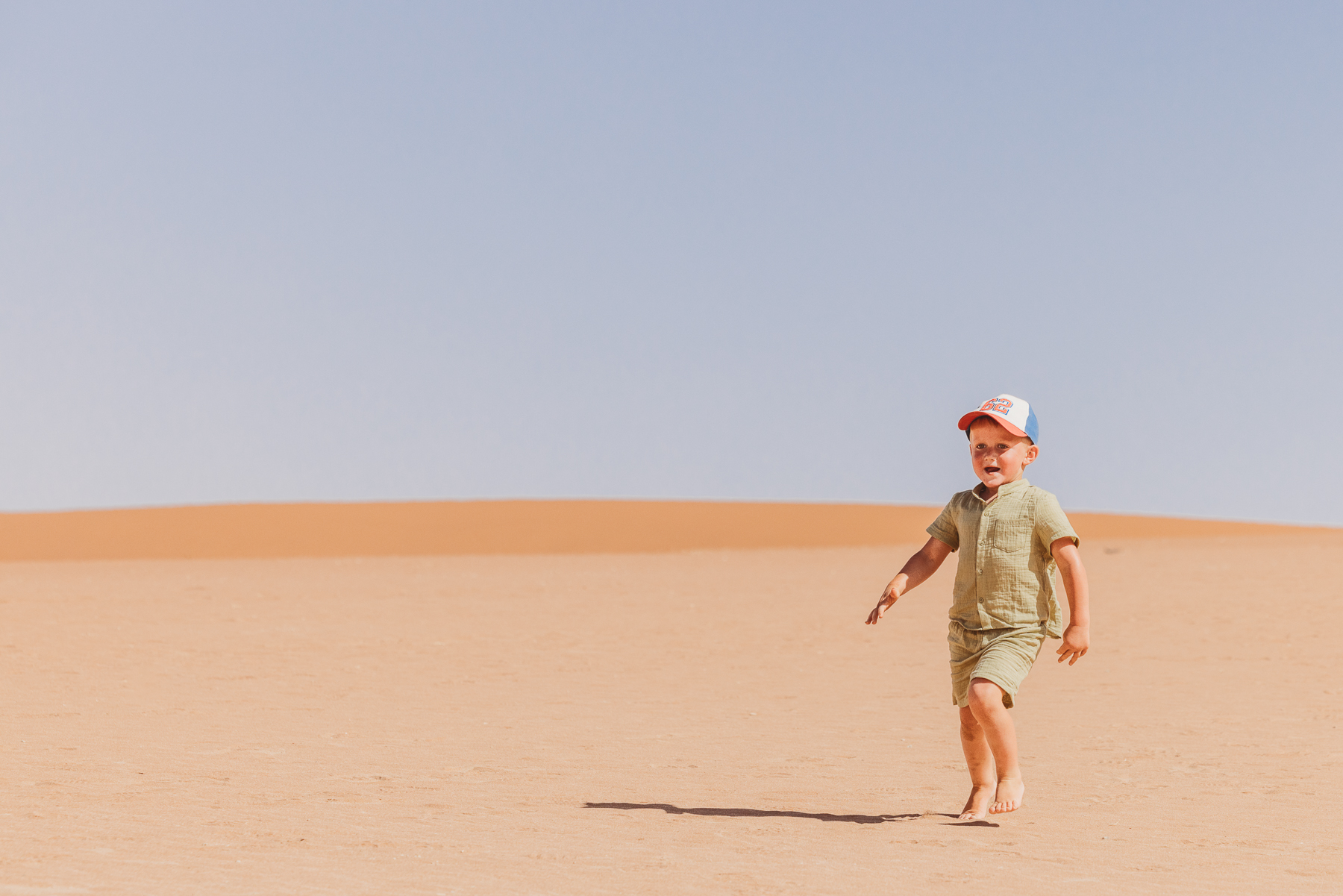
I'm photographing the way their youngest laughs at the impossible steepness of a dune.
The way parents instinctively reach for one another when nobody is watching.The way teenagers pretend they're too cool for family photographs before becoming the stars of them.
I'm photographing how Namibia felt.
And perhaps that's why I find myself increasingly drawn to these adventures. Namibia was never meant to be rushed. It was meant to be climbed, explored, laughed through and shared.
Before long, these boys will be taller than their parents. School holidays will become university holidays and eventually holidays of their own making.
That's the thing about family adventures. They don't happen forever.
As for me?
I was already hoping for the next family.