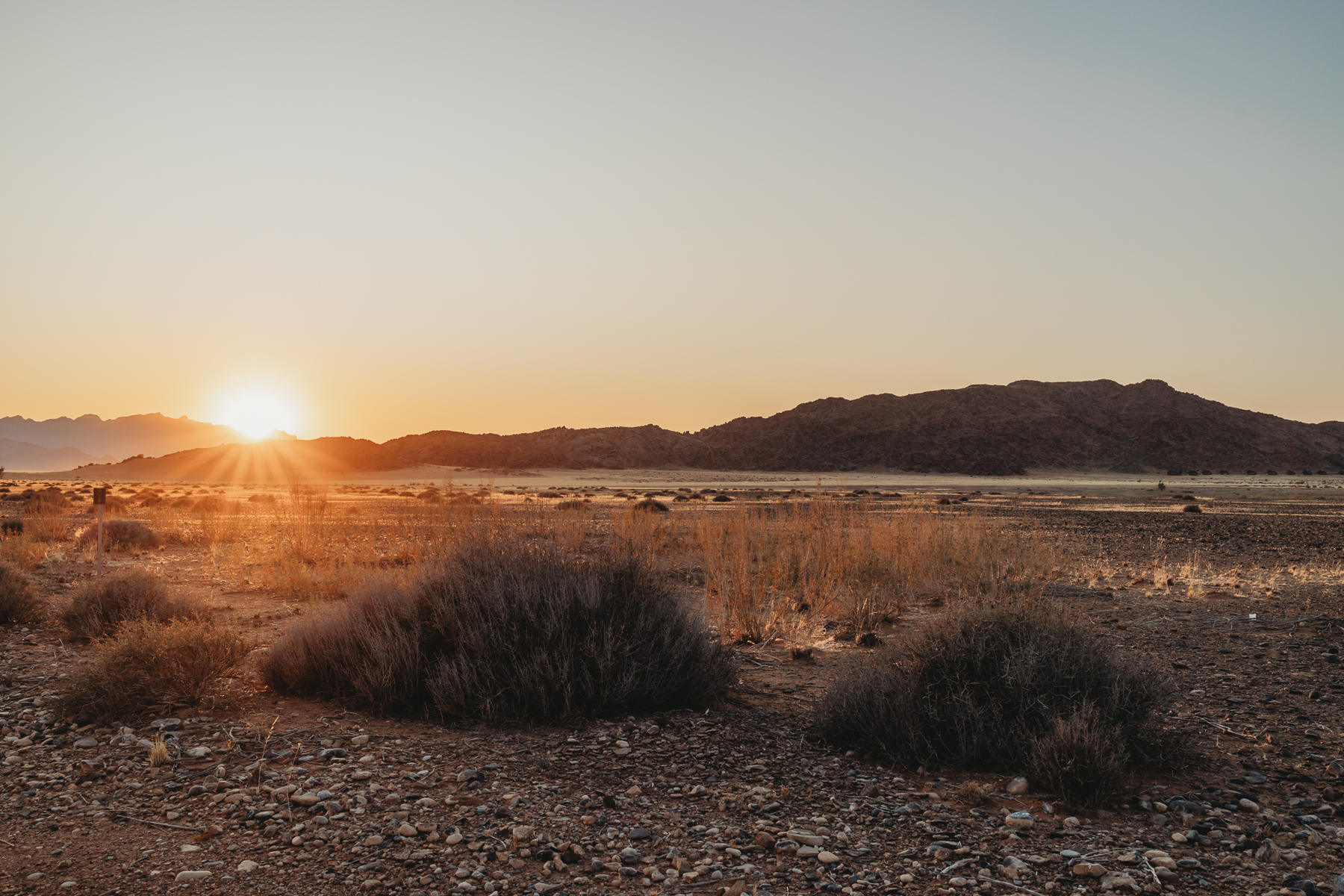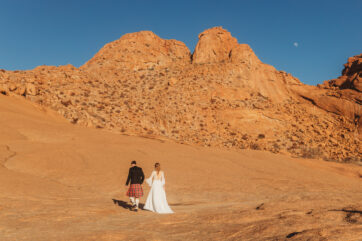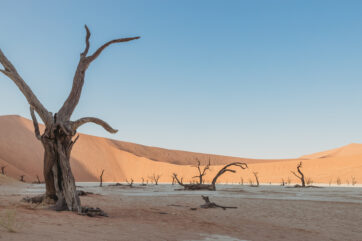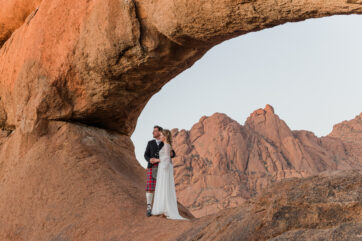
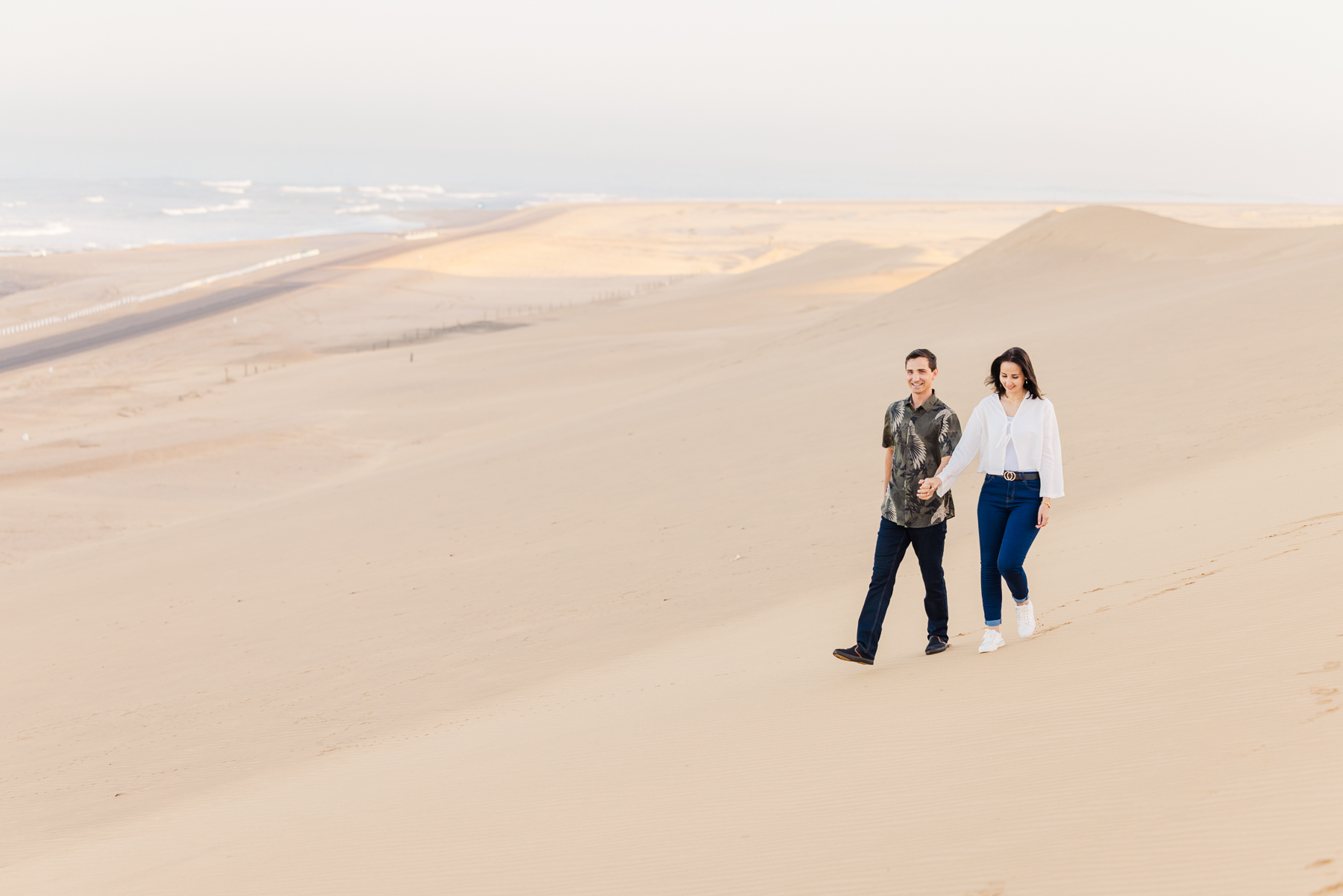
It was my second photoshoot in Sossusvlei.
Elopements have just become a "thing" overseas, thanks to COVID. In Namibia, Elopements were still unheard of.
Tourism was only just finding its feet again after Covid, and this was my first family session in this valley of sand, space and almost nothingness.
From my previous visit, I knew how quickly the desert heated up. I knew what the light looked like at 10 am. I knew exactly why photographers are obsessed with sunrise.
What I hadn’t accounted for was travelling with another photographer.
Someone who had never experienced Sossusvlei before.
So we stopped when the sun first peeked over the horizon.
We stopped when an oryx appeared in the distance.
We stopped while the dunes slowly changed from deep orange to gold.
By the time we reached the Deadvlei parking area, the sun was already flexing its muscles. The children were tired.
The heat was rising from the ground.
And that was the moment I had to convince a family that this was the best day of their holiday.
Fortunately, it was.
That morning taught me something important about Namibia.
The photographs are only part of the experience. Getting there matters too.
And if you’re planning an elopement here, that’s something worth understanding from the start.
Namibia is enormous.
Distances are deceptive.
The light changes everything.
The weather can surprise you. The best plans leave room for adventure.
The reward?
A wedding day that feels less like an event and more like a story.
March.
As if it’s a season on its own.
March marks the end of our rainy season. The ochre-red dunes are patched with green. The oryx have young. The birds sing endlessly. And if you’re lucky, last night’s thunderclouds still hang in the distance.
April through June carries some of that magic forward. Temperatures cool considerably, the skies clear, the stars become brighter, and the wildlife still seems to be celebrating the summer rains.
From July to September, the nights can be cold, though the days warm up faster than you realise. If a cold front moves in from the coast, temperatures can drop close to freezing. This is also the busiest time of year, with travellers from the Northern Hemisphere filling the roads and lodges.
October through March is summer. Hot. Hotter. Hottest. Depending on the hour. The thunderstorms can be spectacular, with towering clouds bulldozing across the horizon for hours. And when the rain finally arrives, Namibians collectively celebrate.
At least for the hour or two that it lasts.
My vote?
March to May. Every time.
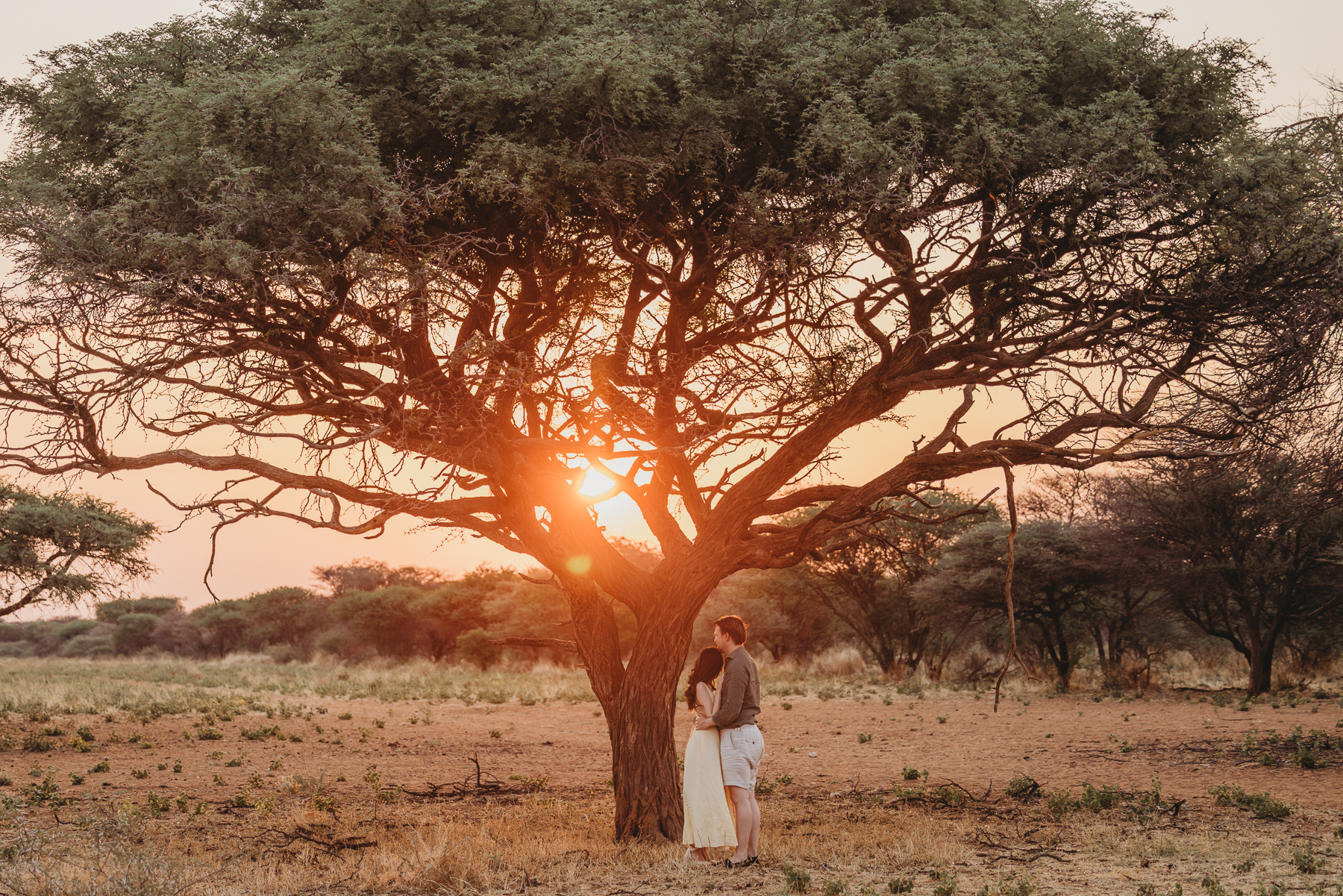
I don’t know. Ha!
How many days do you have?
Google can be deceiving here. A drive that looks short can take half a day. And if you want to take photos, add an hour or two. Long story short, Namibia is enormous, so it takes careful planning and extra leave days.
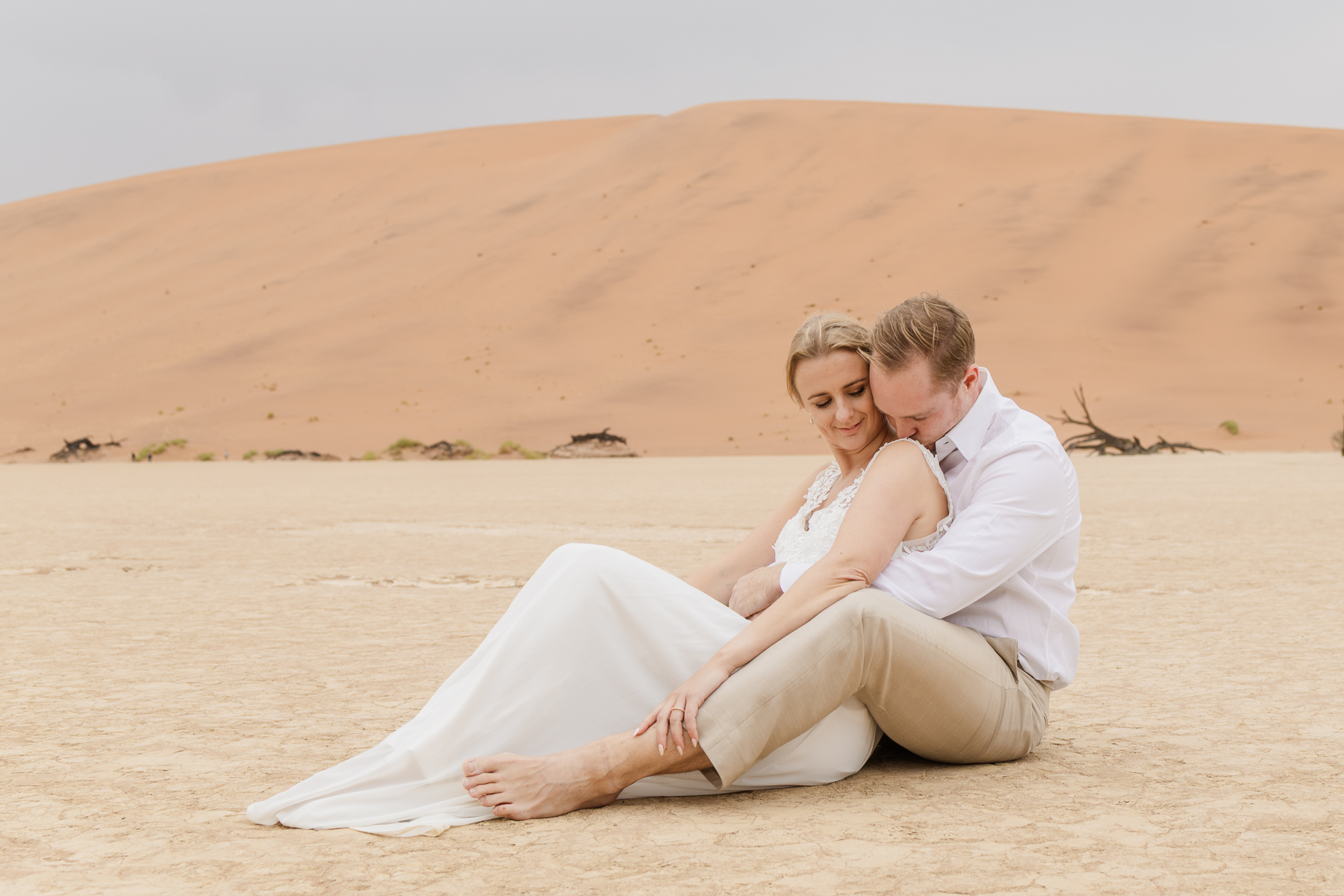
Sossusvlei and Deadvlei — Probably the reason you noticed Namibia in the first place.
What? Is this place for real?
Yes, and I promise you, it’s even better than the 100 million photos on the internet.
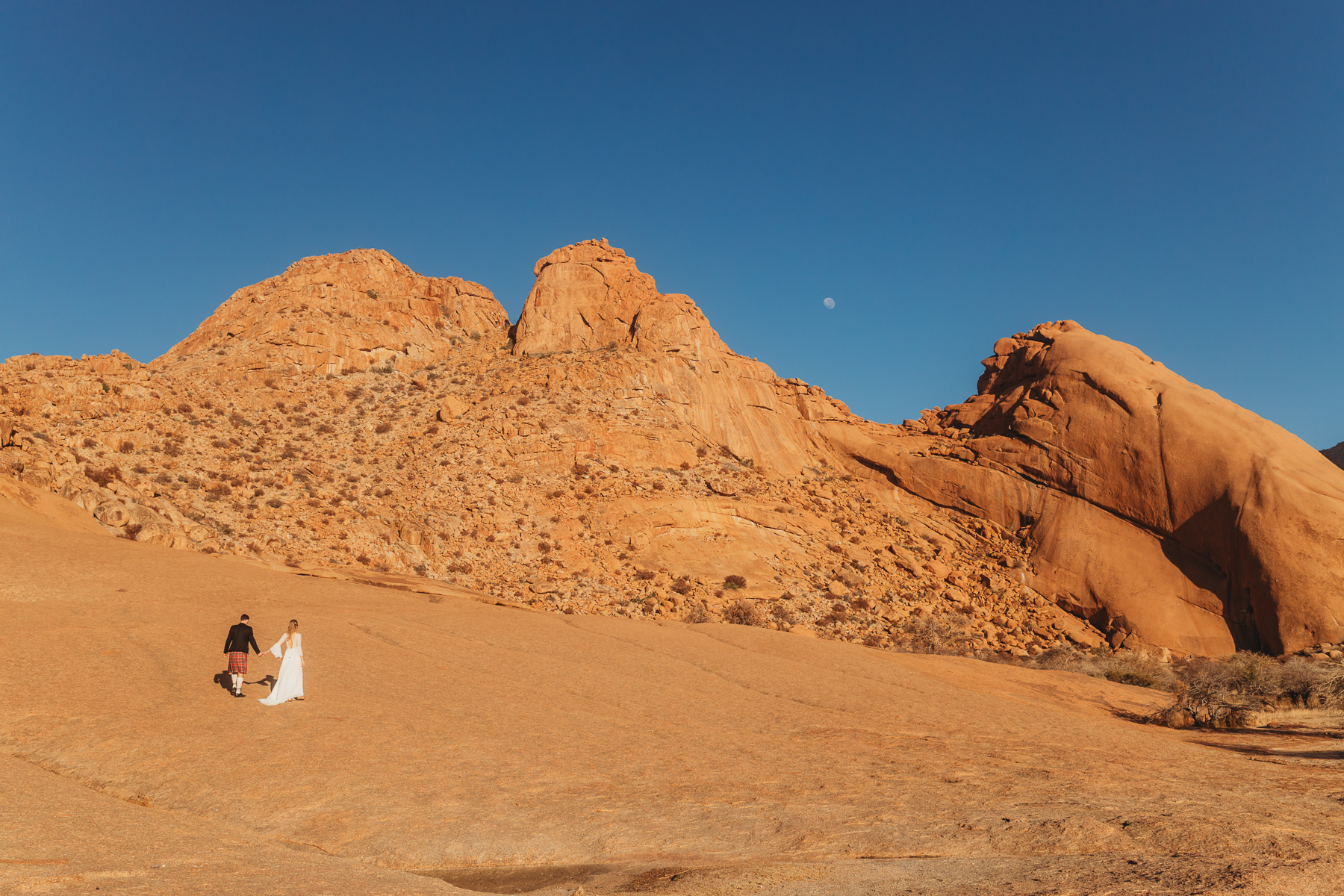
Spitzkoppe — don’t tell anyone, but Spitzkoppe is probably my favourite location in Namibia.
It’s far less visited. Quiet. Magical. And oh so beautiful.
Damaraland — most people head to Damaraland for the desert elephants, and though they are awesome, I can’t really take photos of you with them in the background.
However, the rocky outcrops found all over Damaraland offer a unique landscape and backdrop that is hard to beat. If you are the person who doesn’t want to do what everyone else does, this is your place.
The Skeleton Coast — The Skeleton Coast is home turf for me. The dunes break and tumble into the ocean. Black-backed jackals curiously stand by to comment. Whether the weather plays along or not, you’ll have atmosphere and then some in your photos.
I'm based in Walvis Bay, which means the Skeleton Coast and coastal dunes are landscapes I know in every season and every light condition.
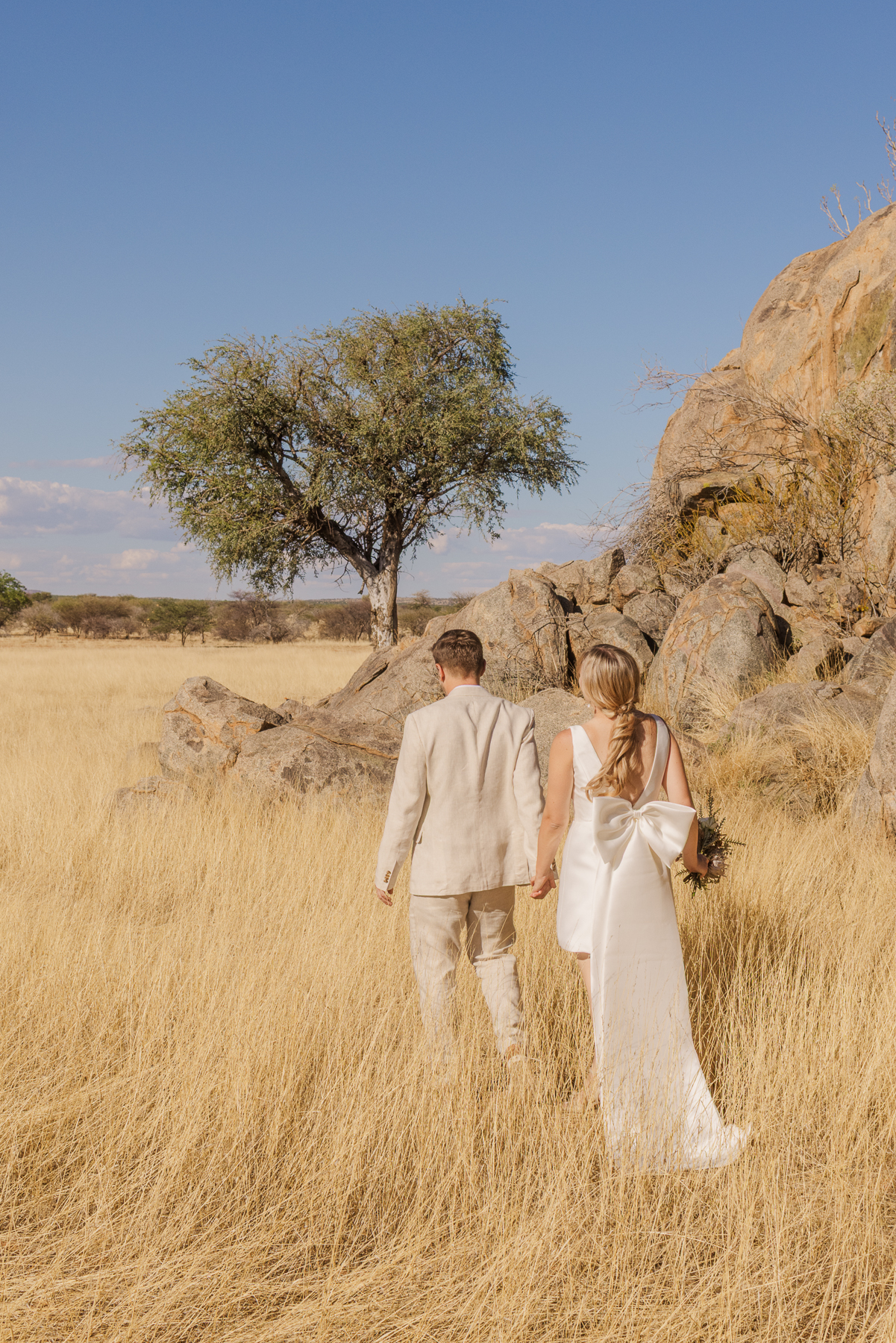
Etosha National Pan & Surrounds – The areas surrounding Etosha have a completely different feel from the dunes and mountains further south. White limestone soils, endless grasslands, acacia trees and wildlife moving through the landscape. If your idea of Africa includes zebra, springbok, wildebeest and dramatic sunsets, you’ll feel right at home here.
Further afield, the white pans make space for thousands of acacia trees and grassvelds. Unique to the interior of Namibia, this is home to me, and golden hour always comes with remarkable speed and urgency. Into African sunsets? This is it!
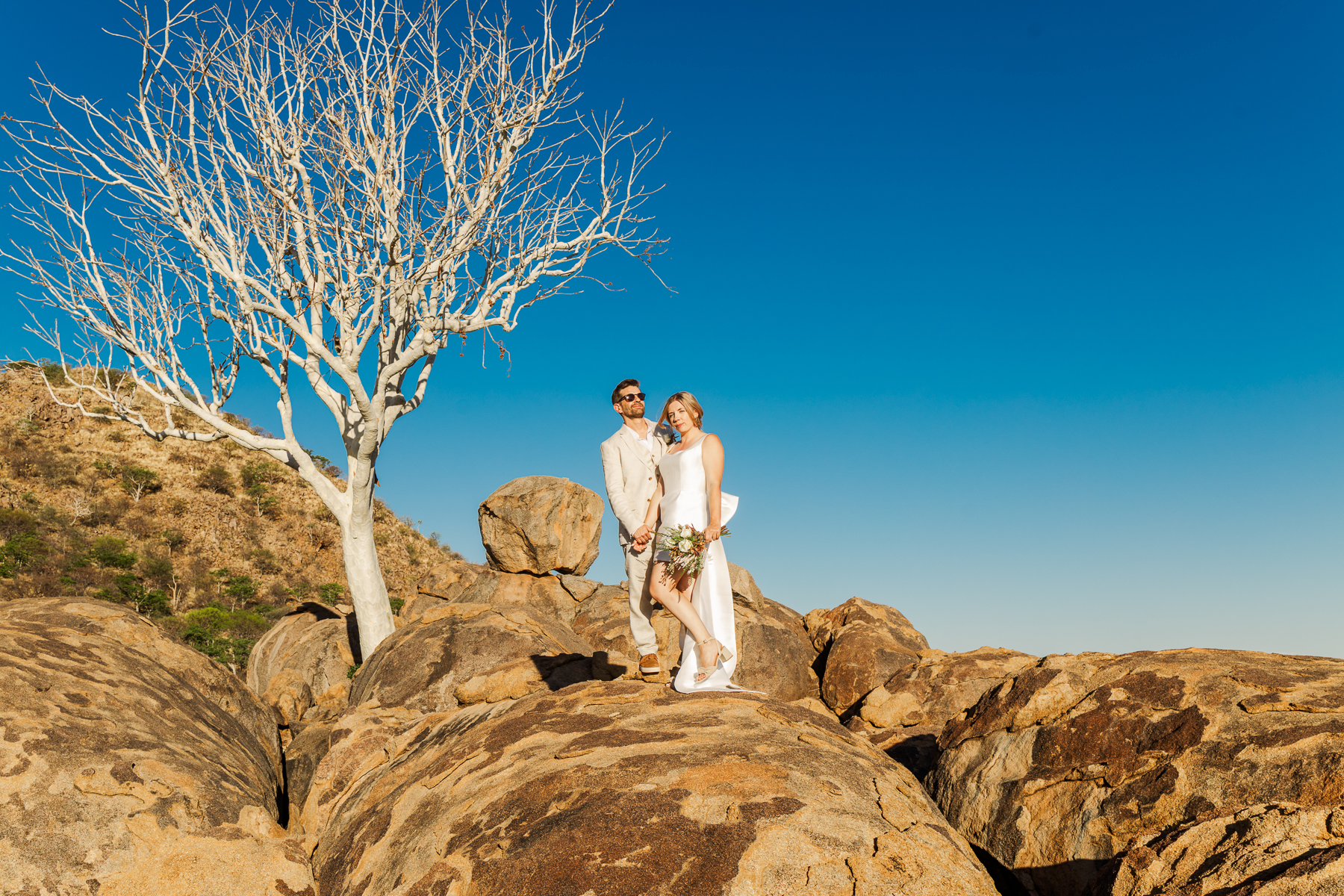
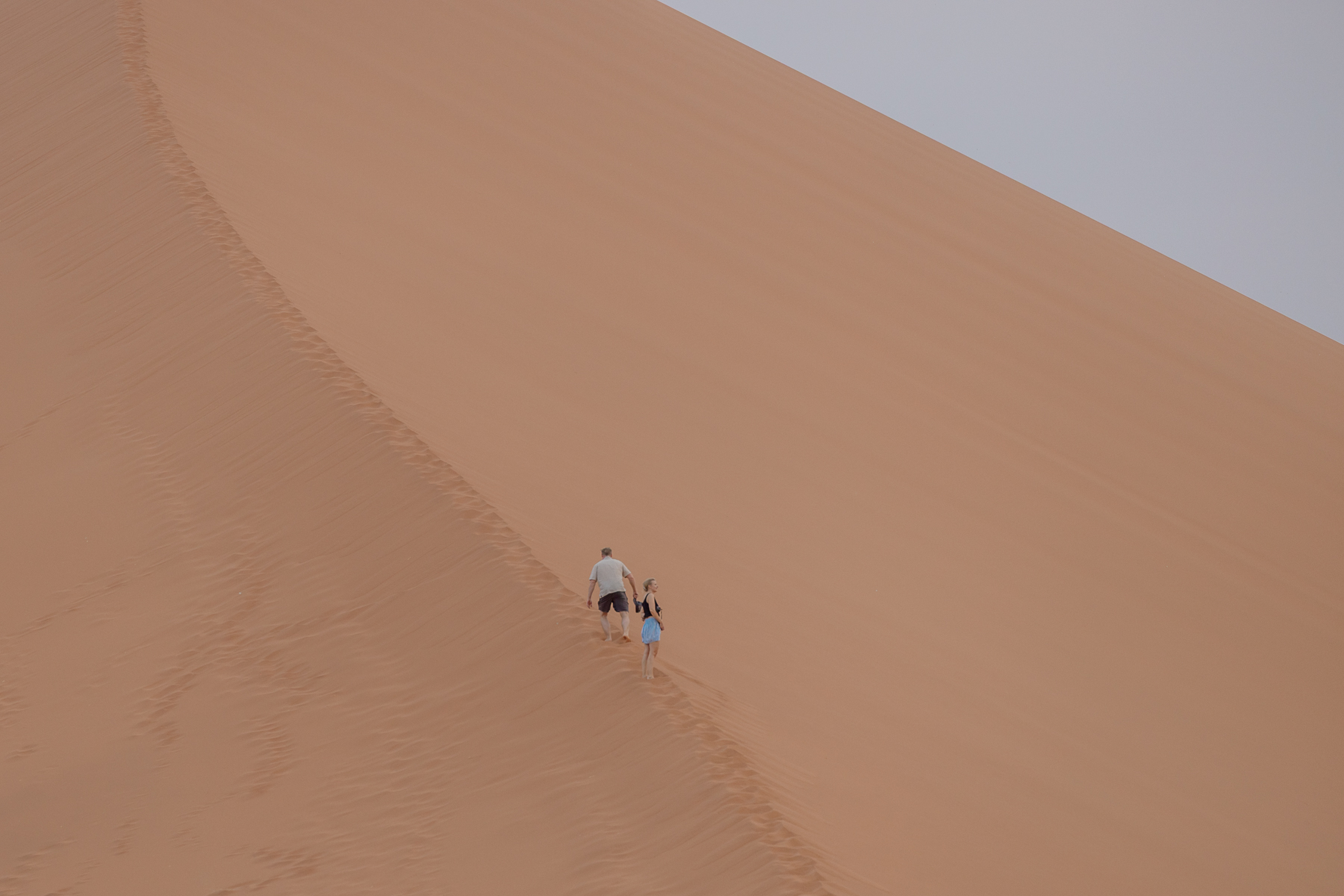
Back to those leave days!
Or stay and say you got lost!
3 days = one region
5 to 7 days = Sossusvlei + coast
10+ days = Namibian highlights road trip.
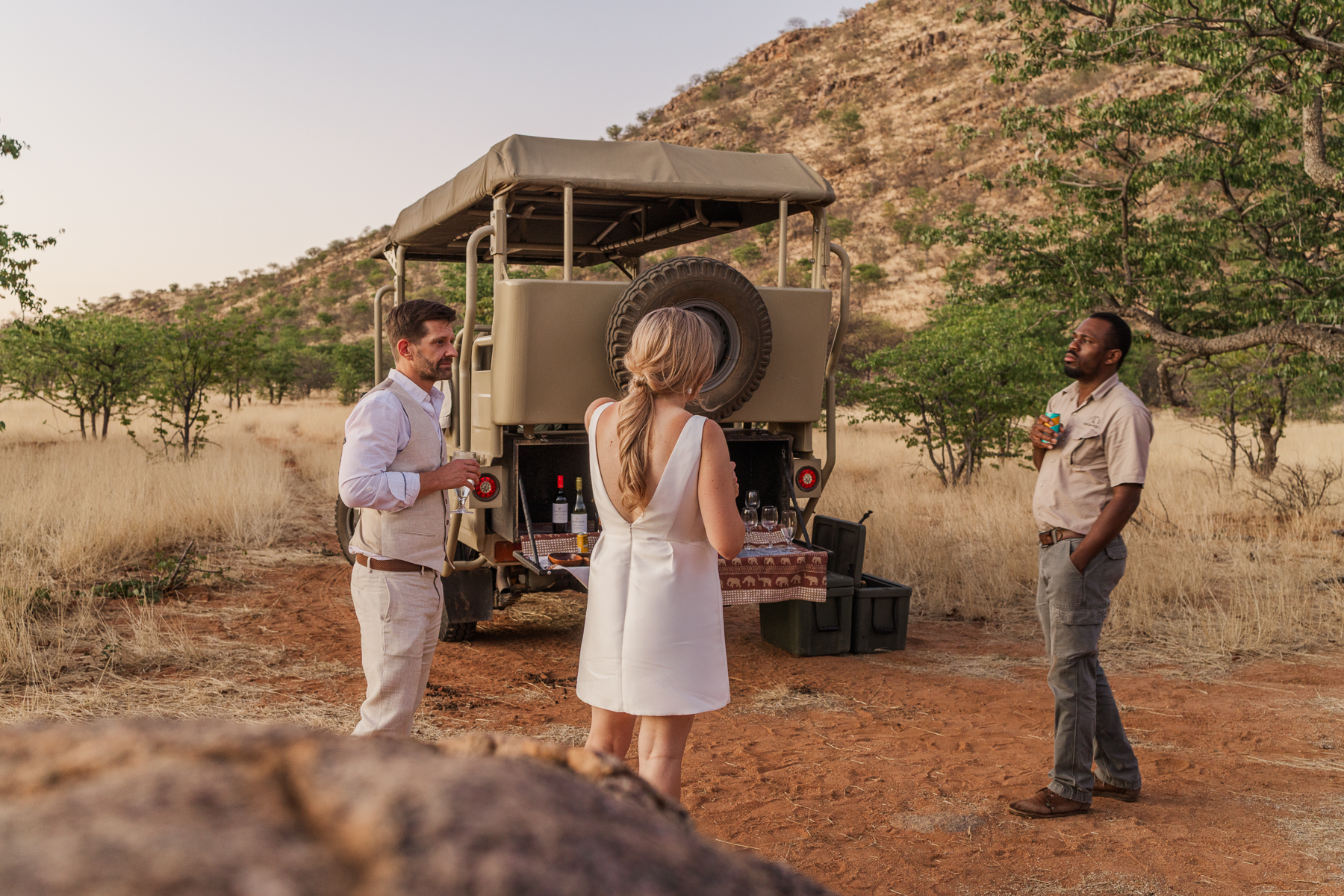
Some couples write private vows. Some drink coffee on a dune while waiting for sunrise. One couple brought a bottle of Amarula and forgot to open it until the drive back to the lodge. There is no standard Namibia elopement day, which is precisely the point
.I plan every elopement around the light. That means an early start — often before sunrise — to be in position when the landscape wakes up. Most elopement sessions run two to four hours, long enough to move through different landscapes and moods without it feeling like a marathon.
You bring each other and whatever makes the day feel like yours. Some couples bring champagne. Some bring the words they've been saving.
Namibia is more accessible than many couples expect. Windhoek's Hosea Kutako International Airport has connections from Johannesburg (under two hours), Frankfurt, and several European hubs. Most couples hire a 4x4 camper or book lodge-based itineraries — I can advise on both, as I also work as a Namibian travel specialist.
Marriage certificates: Namibia does allow legal marriage ceremonies for non-residents, but the paperwork requirements are complex. Most international couples choose to complete the legal formalities at home and have their ceremony in Namibia — this gives you complete freedom of location without bureaucratic constraints.
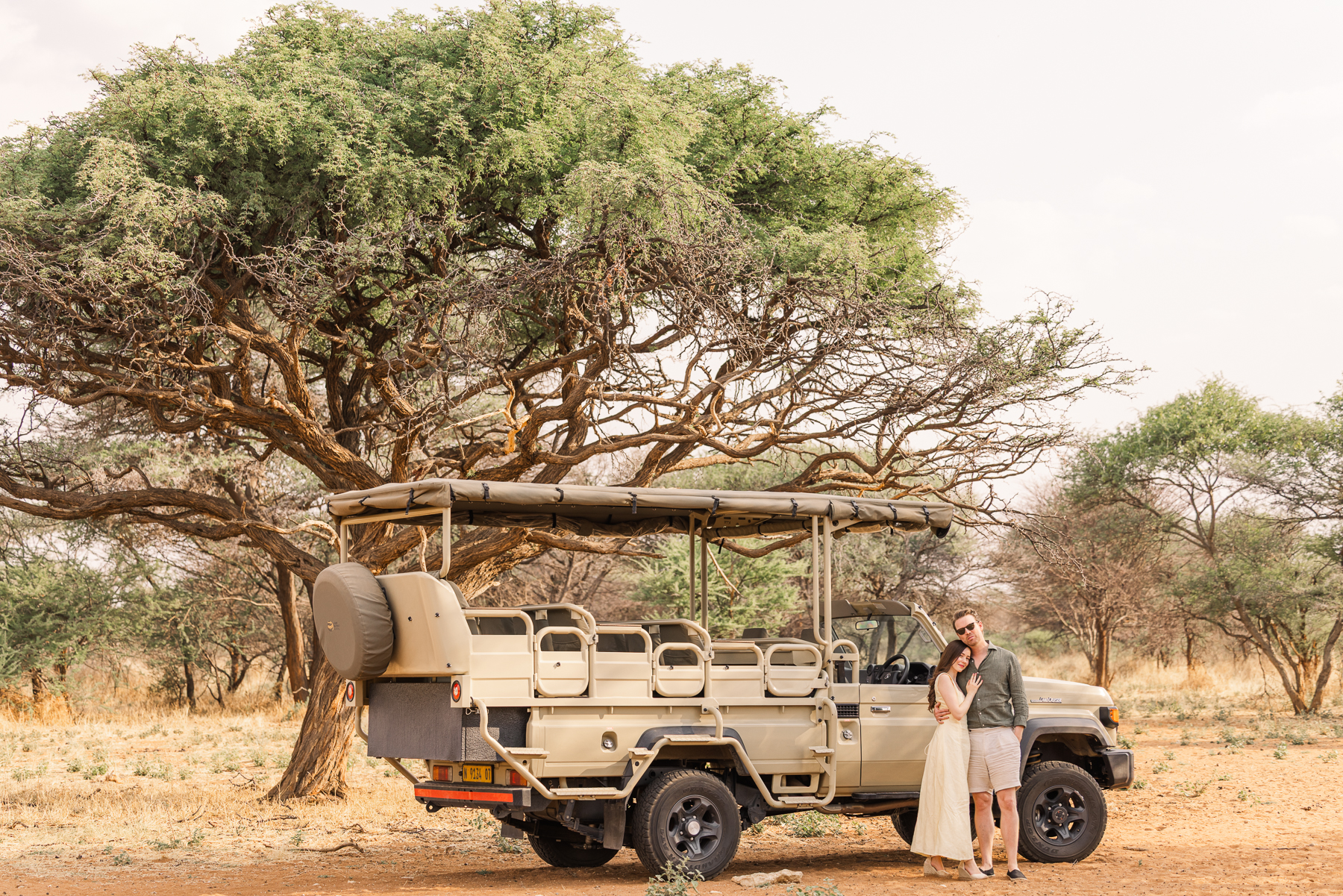
The funny thing about Namibia is that people often book because of the photographs.
Then they arrive and realise the photographs were never really the point.
It is the silence.
The scale.
The stars.
The feeling of standing somewhere ancient enough to make wedding planning seem wonderfully unimportant.
If that sounds like your kind of place, I’d love to help you plan it.
→ Contact Mariette